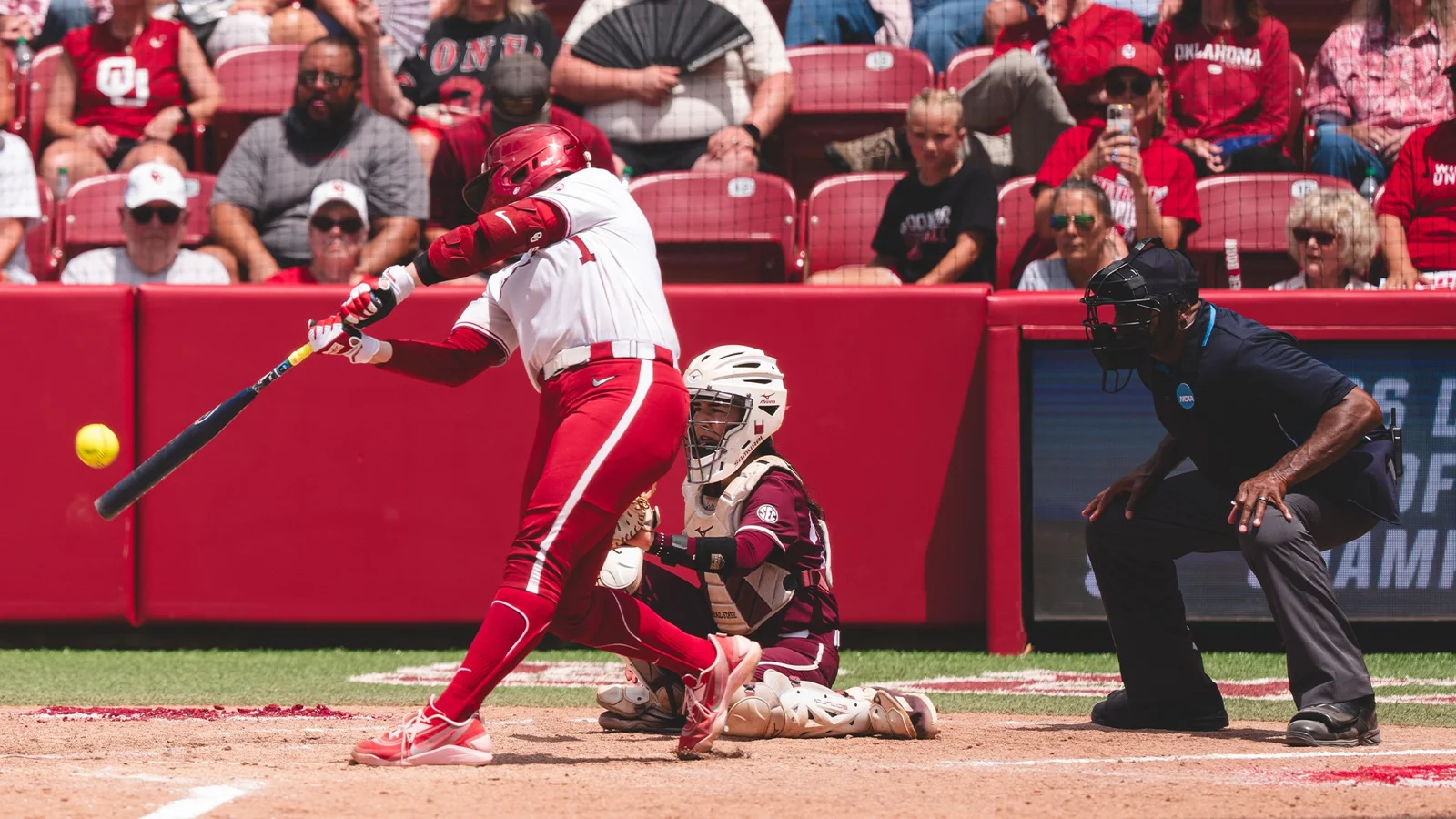
The best college softball catchers combine an influential bat with the demands of the game's most involved defensive position. For a completed 2026 season assessment, the Diamond Sports/NFCA Division I award provides a concrete starting point. It does not end the comparison: positional honors, offensive performance and the available defensive evidence answer different parts of the question.
What makes a catcher one of college softball's best?
This guide focuses on NCAA Division I women's softball in the completed 2026 season. It is an editorial evaluation of standout catchers, not an official NCAA player ranking and not a list of high-school prospects graduating in 2026. That scope is important because a recruiting-class search and an active-college search can return similarly titled pages while describing different athletes at different stages of their careers.
Start with offense, but do not stop at batting average. On-base ability tells you how frequently the catcher avoids an out; slugging and extra-base production describe how much damage she creates when she connects. Home runs are visible and valuable, yet a lineup also benefits from a hitter who walks, extends an inning or forces an opponent to pitch carefully with runners aboard. Compare those contributions with the role actually played, rather than treating everyone who has caught at some point as a full-time catcher.
Then consider the defensive evidence. Fielding percentage records how successfully a player handles the chances recognized in the scoring system. It does not provide a complete measure of receiving, blocking or the quality of a catcher's decisions. A very high percentage is encouraging, but it cannot by itself prove that one catcher is the best receiver in the country. The position includes work that a conventional box score describes only partially.
Throwing numbers need their denominator. Three runners caught from six attempts and three caught from thirty attempts are different results, even though the raw total is identical. A small sample also makes a percentage fragile: one additional successful steal can change it sharply. And an opponent's willingness to run depends on the pitcher, runner, count and situation as well as the catcher. Treat the statistic as part of the battery's performance, with the catcher's role carefully interpreted.
The NFCA's 2026 catcher-award recap explains that its Diamond Sports honor recognizes the first-team All-America catcher in the relevant division. NCAA Division I, Division II and Division III have separate recipients; other collegiate organizations have their own awards too. That is meaningful peer recognition within a defined competition, rather than evidence that every college catcher has been placed in one national order.
The most useful comparison therefore combines identifiable honors, substantive hitting, defensive opportunities and workload. It also admits where the evidence ends. A catcher can deserve attention without a fabricated framing metric, and a powerful bat does not need an unsupported claim about leadership to be impressive. Evaluate what the season establishes, explain what makes the performance valuable, and keep reputation or preseason expectation separate from the final record.
The 2026 positional award gives the comparison a starting point
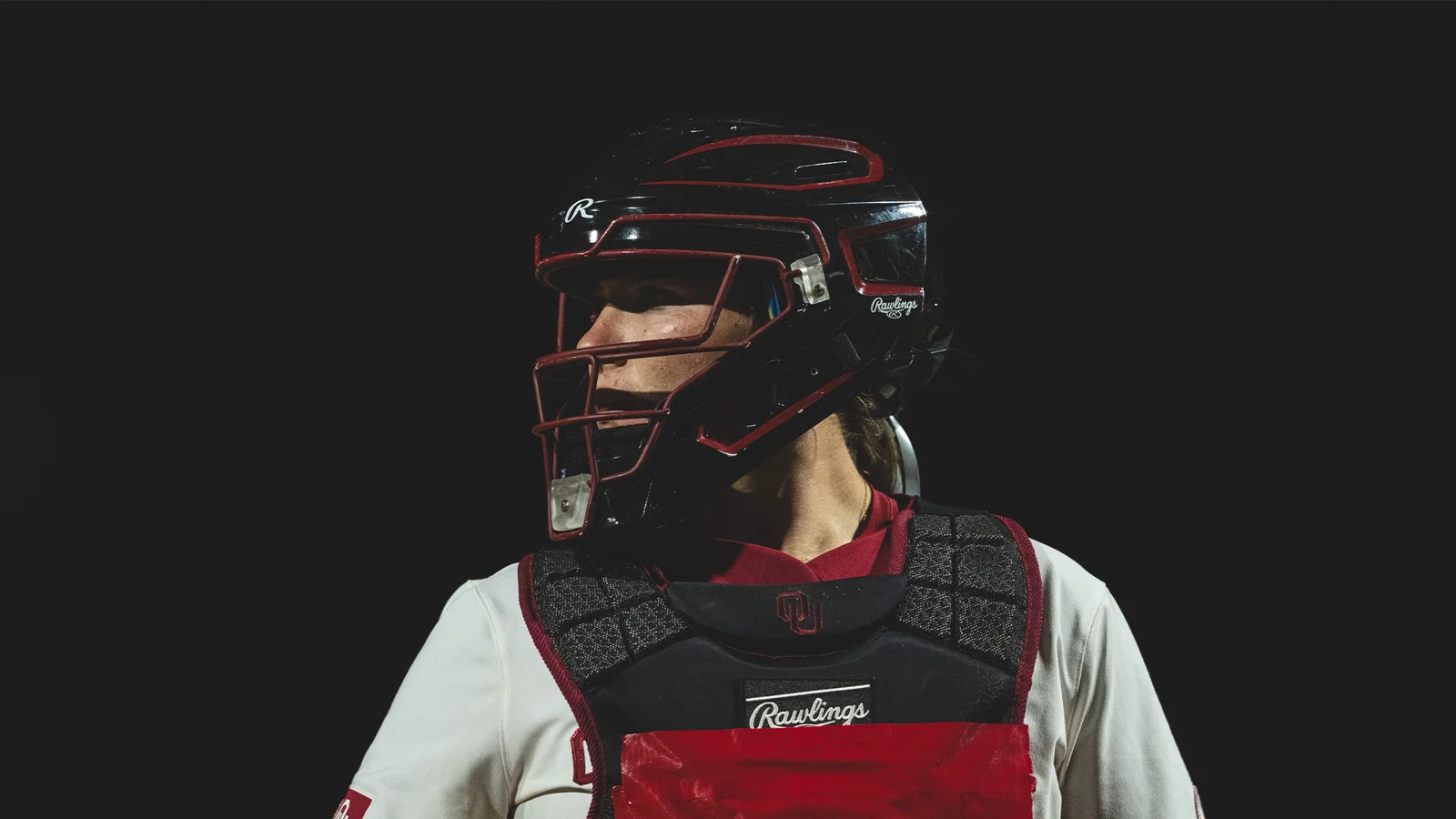
Kendall Wells of Oklahoma earned the 2026 Diamond Sports/NFCA Division I Catcher of the Year honor. She also received the collegiate softball Johnny Bench Award. That combination makes her the clearest award-based starting point for this season's discussion. The evidence supports calling her an exceptional 2026 catcher without pretending that the selection creates a precise statistical ranking of every aspect of the position.
What the award measures and what it leaves open
Oklahoma's NFCA announcement identifies Wells as a first-team All-American and the program's second Diamond Sports/NFCA catcher winner, after Jessica Shults in 2012. That matters because the honor recognizes the position, rather than merely attaching “catcher” to a general list of productive hitters. It is a strong piece of evidence that her season stood out to the voting organization.
The Johnny Bench award needs its own label. Its program recognizes collegiate baseball and softball catchers and high-school winners in designated states. Wells won the college softball category; she did not win a baseball award. Nor should two connected honors be presented as two completely independent measurements of receiving quality. Awards can reinforce a season's recognition while still resting on overlapping evaluations and the same remarkable performance.
The useful editorial conclusion is therefore specific: Wells belongs at the front of a discussion anchored in 2026 positional recognition. If a fan prefers another catcher because of a particular defensive strength, that argument still needs evidence about that strength. The trophy establishes the result of an award process. It cannot supply missing tracking data, prove every pitch was framed better or tell us how another catcher would have performed with Oklahoma's staff.
Put the winner's production in its proper context
The final season figures in Oklahoma's June Johnny Bench announcement show a .358 average, 39 home runs, 88 RBI and a 1.028 slugging percentage. Her 39 homers set the Division I freshman single-season record. Be precise about that qualifier: a freshman record is not the unrestricted all-time NCAA single-season home-run record.
Those numbers describe a hitter whose contact frequently changed the inning, rather than someone contributing only occasional power from a defense-first lineup spot. The RBI total also depends on teammates reaching base, so it should not be treated as a pure isolated measure of individual hitting. Home runs and slugging give the run production more context. Together, they explain why opponents had to consider much more than simply retiring a catcher near the bottom of an order.
Her official player biography credits 50 starts behind the plate in 2026. That is an important role distinction: this was not just a designated player's hitting season with a token catching appearance. The current roster calls her a sophomore for 2027, but her award-winning 2026 campaign was her freshman season. Player pages change their roster heading; the historical season does not change with it.
The school also reports a .993 fielding percentage and three runners caught in six steal attempts. The defensive record is encouraging, yet six attempts cannot support a sweeping league-wide throwing conclusion. One different outcome would noticeably change the percentage. The fair reading keeps both ideas in view: Wells handled substantial catching work with strong recorded results, and the throwing sample remains too small to measure every comparison confidently. That combination is more informative than calling her arm unbeatable.
Other standout catchers deserve more than a batting-average comparison
Wells' award case does not turn the rest of the position into an afterthought. Sydney Stewart, Jocelyn Erickson, Reese Atwood and Bri Despines offer different reasons to watch, and the differences make the conversation better. A useful shortlist describes what each player actually supplied in 2026 instead of assigning a numbered order from reputation alone.
Power and run production behind the plate
Sydney Stewart, Arizona: her official season biography records a .390 average, .534 on-base percentage and .919 slugging percentage, with 20 home runs and 76 RBI. She made 47 starts at catcher and eight as the designated player across Arizona's 55 games, won Big 12 Player of the Year and earned NFCA first-team All-America recognition. The .490 figure associated with her conference batting title belongs to Big 12 play, not her overall season.
Stewart's profile is especially instructive because on-base production and power reinforce one another. The opponent has to balance the cost of an extra-base hit against the cost of avoiding her bat and putting a runner aboard. Her season should not be reduced to “twenty homers,” nor should the larger conference-only batting average be slipped into an overall comparison. Keep each number within its actual competition scope.
Jocelyn Erickson, Florida: the Gators' 2026 biography lists a .400 average, .518 on-base percentage, .810 slugging percentage, 21 home runs and 74 RBI. Her 63 starts were split between catcher and first base. She earned Softball America first-team and D1Softball second-team All-America honors; her NFCA regional selection was in the DP or utility/non-pitcher category. That classification should not be relabeled as a 2026 NFCA catcher award.
Erickson gives a comparison more than a power total. Reaching base at that rate allows the lineup to keep creating pressure even when a home run does not arrive. Her mixed defensive deployment also reminds us to separate offensive value from catcher-specific workload. She can belong in a discussion of standout catching talent while the analysis still identifies how her school used her during that season.
Reese Atwood, Texas: the Longhorns' final cumulative statistics show a .326 average, .684 slugging percentage, 19 home runs and 61 RBI, with 65 appearances and 64 starts. Those are the 2026 figures to compare, rather than importing her award-winning 2025 season or an April snapshot. Nineteen homers and substantial run production remain meaningful contributions from a catcher even in a year when the most extreme offensive numbers belonged elsewhere.
Defense, throwing and the workload question
Atwood also supplies a concrete defensive example. Texas' Defender of the Week announcement describes a no-look pickoff at third against Texas A&M on March 27 and two runners caught stealing during a four-game stretch. That is an identifiable play and an identifiable sample, not a reason to extrapolate a full-season defensive rate. It illustrates the catcher's ability to create an out beyond simply completing a strikeout putout.
A pickoff and a caught-stealing play should also remain distinct in the discussion. The former attacks a runner's position on the basepaths; the latter responds to a steal attempt. Both can matter in a close game, but combining them casually into one throwing percentage changes what the statistic means. The highlight is valuable because we know what happened, not because we can convert it into an invented comprehensive defensive score.
Bri Despines, Louisville: her official senior-season record offers a different balance. She started all 58 games, including 54 at catcher, and hit .402 with a .552 on-base percentage, .756 slugging percentage and 70 RBI. Louisville credits twelve runners caught stealing and an NFCA third-team All-America honor. She also stole 21 bases in 23 attempts herself, adding a dimension that a catcher comparison based solely on home runs would miss.
The twelve defensive outs deserve attention, but compare opportunities before ranking her arm against Wells' three from six attempts. A larger raw total can reflect more runners challenging the battery. Despines' own baserunning is a separate contribution: it gives her team another way to advance or score after she reaches. Her catching workload and offensive versatility make her a substantive inclusion, rather than a token name added to extend a list.
Why a preseason ranking cannot settle a postseason debate
Publisher rankings are useful when their timing is explicit. Softball America's May 2026 catcher rankings describe an in-season assessment. They are neither a preseason forecast nor a final award vote, and the numbers attached to them should not replace completed-season statistics. A player can move during the spring; a later result can strengthen or weaken a case that was reasonable when first published.
That is why this shortlist avoids presenting old rankings as current fact. Awards identify the awarding organization's selection, final school statistics establish production, and position starts help establish workload. Bringing those pieces together allows a fair comparison without copying a publisher's order or inventing an ESPN catcher ranking that has not been established.
How to watch an elite catcher with a more informed eye
The next time you watch one of these catchers, follow a complete defensive inning rather than waiting for a throw to second. Notice the count, the runner's position and the pitch location before judging the result. A ball that gets away, a successful steal and a throwing error describe different events. The catcher influences each situation, but the responsibility and the official statistical treatment are not identical.
The NCAA softball scoring rules distinguish a wild pitch charged to the pitcher from a passed ball charged to the catcher, using whether the pitch could be handled with ordinary effort and the applicable advancement conditions. Neither is scored as an error. That is one concrete reason an impressive fielding percentage cannot tell you everything about keeping pitches under control.
Use that distinction to ask better questions, not to pronounce every ball from a television angle. Did the catcher have a reasonable chance to handle it? Did a runner advance? What did the official scorer record? A replay can improve your understanding of a play, while the season's formal record gives you a consistent basis for comparison. Neither a single highlight nor one difficult-looking pitch should carry an entire defensive argument.
Read the pitching partnership alongside the catcher line
For a steal attempt, follow the sequence from the pitcher's delivery to the catcher receiving the ball, transferring it, throwing and the infielder completing the play. A catcher does not control every link. A high pitch, an unusually long delivery or a runner's strong jump can make the task harder. Conversely, an out recorded in the catcher's line does not mean the rest of the battery and defense contributed nothing.
The same restraint belongs in interpreting a staff's ERA. A catcher can contribute to the operation of the battery, but the team's run prevention is not an individual catcher statistic. Without tracking or a documented evaluation, avoid turning a strong pitching season into proof that one receiver alone caused it. The meaningful discussion describes the evidence we have and the possible contribution without claiming certainty about the invisible parts.
At the plate, compare how an opponent approaches the hitter across several appearances: willingness to challenge, pitches outside the zone and what follows a walk. A catcher with serious power and on-base ability can alter those decisions even on a day with no home run. Wells' award-winning power, Stewart's combination of patience and extra-base hitting, Erickson's offensive reach, Atwood's documented defensive plays and Despines' broader skill set give fans specific things to follow.
Use the college softball TV schedule when the next season's games are available, and revisit the completed statistics when comparing performances. The best catcher debate becomes richer when it connects identifiable production to actual catching work. In 2026, Wells offers the clearest positional-award case; the other standouts show why evaluating the position still requires more than a trophy or a batting average.
Join the conversation
Share a question or a thought about college softball. Comments are reviewed before they appear. Keep it friendly and on topic.
No comments yet. Start the conversation.
Sign in with Google to leave a comment. Your email address is not displayed.