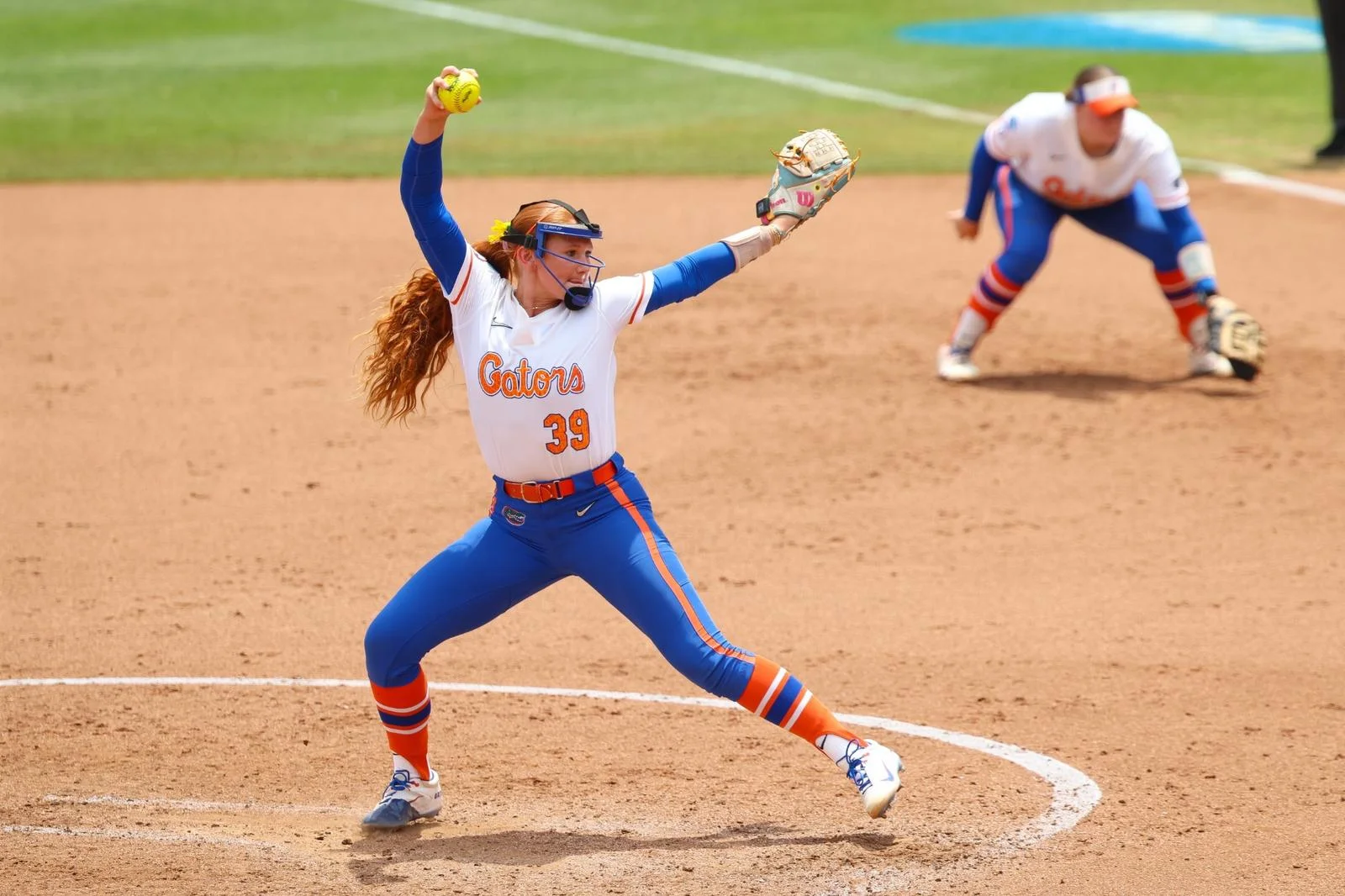
The 25-player college softball roster limit applies within the House settlement framework for participating Division I schools. It is a limit on the team's countable roster, with specific exceptions. It does not require every school to carry 25 players or award 25 full scholarships.
For supporters, recruits and families, three decisions need to stay separate: whether an athlete is eligible, whether a program has a place for her, and what financial aid the school actually offers. This guide explains the roster and scholarship framework using official information checked on October 15, 2026.
Who the 25-player softball roster limit applies to
The College Sports Commission's roster table lists women's softball at 25. Its accompanying explanation identifies participating schools, rather than declaring one number for every institution that plays college softball. Start with that scope before trying to count the names on a team's website.
The NCAA's June 23, 2025 adoption announcement describes the shift: schools in the defendant conferences and other schools opting into the settlement framework use roster limits in place of sport-specific scholarship limits. The adopted provisions took effect July 1, 2025. The announcement's opt-in deadline refers to the 2025–26 academic year; it should not be recycled as a new annual deadline for a family making decisions in autumn 2026.
For softball, 25 is neither the number of players who must start a game nor a promise of 25 equal roles. A team can meet a roster limit while giving its players very different competitive opportunities. Conversely, a player may have the academic and athletics eligibility to compete but still need a program willing and able to put her on its submitted roster.
Confirm the school's participation before applying the number
Ask the athletics compliance office which roster framework applies to the school for the academic year in question. A conference name or an old recruiting article can be useful background, but it is not a substitute for current institutional confirmation. This is especially important when comparing programs from different divisions or moving between institutions.
The House settlement's participating Division I framework should not automatically be assigned to Division II, Division III, NAIA or junior-college softball. Those programs have their own governing rules. A family comparing a Division I offer with another college pathway needs each school's actual explanation of team places and funding, not a universal assumption based on a headline about 25.
For a fan following a college softball program, the practical meaning is that roster construction involves more than filling a batting order. Coaches have to assemble a team within the applicable framework, while the school certifies compliance. The limit tells you one part of that framework. It does not reveal which players have aid, who will travel for a given series or how a coach intends to distribute innings.
A roster place and a full scholarship are different commitments
A coach offering a place on a team has answered a different question from a school offering to pay a student's education costs. The first concerns participation; the second concerns money and its written terms. Neither statement, by itself, promises a starting position. Families should ask for each commitment separately rather than allowing the phrase "25 scholarships" to stand in for all three.
What the new scholarship permission changes
The Commission's table places 12 in the old scholarship-limit column and 25 in the new roster-limit column for softball. Those headings matter: the table does not say that the old team could have only 12 players. Under the new participating-school framework, a school can offer partial or full scholarships across its roster. It has permission to fund more athletes, rather than an instruction to give every athlete a full ride.
This creates an important distinction when reading recruiting announcements. An expanded ability to award aid does not tell a family the amount allocated to a particular player. A roster announcement is also not a public statement of that player's financial package. Treat claims about a team's exact scholarship distribution cautiously unless the institution has actually disclosed them.
Existing protections matter, too. The NCAA's Division I Core Guarantees protect an athlete who received athletics aid during her first year at that institution and still has eligibility remaining: athletics reasons, including roster management, injury and performance, cannot be used to reduce, cancel or decline to renew that aid. Have compliance explain how those conditions apply to an individual case. Protection of funding does not itself establish a right to compete or require a coach to start the player.
Compare a written aid offer with the cost of attendance
Compare the remaining cost, not just the largest scholarship number. In an illustrative example, School A has a $30,000 annual cost and offers $20,000 in grants, leaving $10,000. School B has a $50,000 cost and offers $30,000, leaving $20,000. The larger award leaves the larger bill. These are invented figures for explaining the calculation, not prices or offers from actual softball programs.
Ask each financial aid office which costs its estimate includes, what the athletics award covers, and how other grants affect the final package. The NCAA's financial aid guidance identifies academic and need-based assistance as other possible components. A loan can help finance a bill, but it still needs repayment; keep borrowing separate from scholarship savings when comparing offers.
Read the formal financial aid agreement for its amount, duration and conditions, then ask what written notice and appeal process applies to a disputed change. A verbal recruiting conversation is not a substitute for those details. A useful comparison has an actual annual cost, confirmed grants and an understood remaining obligation alongside the softball opportunity.
Why a published team roster can contain more than 25 names
A website showing 26 or 27 players is not enough evidence to declare a rules violation. The framework includes Designated Student-Athletes, often shortened to DSAs, whose places are exempt from the limit. The NCAA's House settlement implementation questions and answers explain the transition protection and why a submitted roster can exceed the headline number.
The designation concerns athletes an institution attested were, or would have been, removed from its 2025–26 roster because of the new limits. It also requires the specified connection before April 7, 2025: an eligible or squad-listed 2024–25 athlete, or a recruit recruited or assured a 2025–26 place. It is not a designation a coach can newly invent every year for an extra recruit.
A qualifying DSA's exemption lasts through her remaining athletics eligibility. The athlete can carry that protection to another school; her departure does not leave an extra exemption behind for the former team to give somebody else. Consider a purely hypothetical softball roster containing 27 athletes, two of whom are qualifying DSAs. That can mean 25 countable players and two exempt players, rather than a 27-player count against a 25-player limit.
For a reader assessing a real program, ask what the public list actually represents. Check the season selector and publication date before comparing two screenshots. The public biography page is not the institution's compliance submission in CAPS, and a jersey number is not a designation of financial aid or exemption status. A head count can identify a question worth asking; it cannot supply confidential facts about individual athletes.
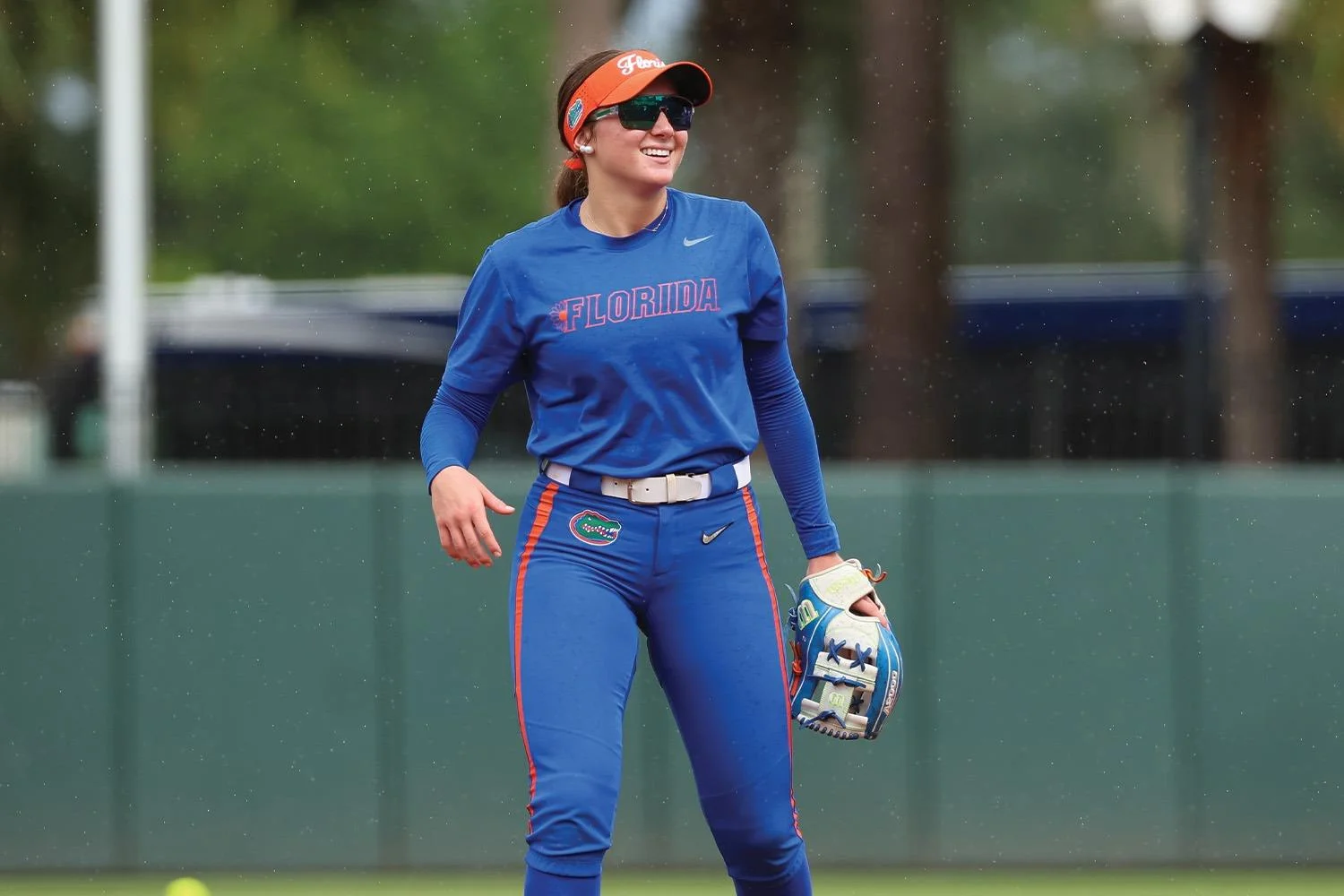
The reverse assumption also fails: a roster under 25 does not prove that a program has unfunded vacancies waiting for applicants. Florida's October 13, 2026 preview describes 21 players for the 2027 team, comprising 14 returners and seven newcomers. That is a published team count, not an invitation to claim four places or a disclosure of the program's scholarship budget.
Fans can discuss positional depth from a public roster without guessing a player's designation. Families need a more precise answer: whether there is a countable place available for this athlete, in this academic year, at this institution. Those specifics make the national number useful.
What roster pressure means for recruits, transfers and walk-ons
The roster framework has practical consequences before opening day. Under the adopted roster provisions linked by the Commission, submission is due by the day before the first championship-selection contest or December 1, whichever comes first. After that deadline, roster inclusion governs athletics activities, including required and voluntary activities, subject to the stated exceptions. A family should ask when the school's decision becomes final rather than assuming the spring opener is the first meaningful date.
Walk-on status does not create an extra place
A walk-on who receives no athletics scholarship still needs an available countable roster place unless a valid exception applies. Paying tuition personally does not create a 26th ordinary place at a participating school. That does not mean walk-ons are prohibited; it means the source of the athlete's tuition payment does not decide whether she counts.
Ask a coach to explain the proposed route precisely. Is the athlete being offered a submitted roster place, being considered at an authorized tryout, or simply encouraged to apply to the university? Those are materially different conversations. A student should be able to evaluate attending the school even if the softball opportunity does not materialize.
The tryout provision is not a route around a full roster after submission: an athlete trying out after the deadline must be added under the roster rules. Nor should a family assume that calling someone a manager permits ordinary player participation. Limited manager assistance has its own rules. If the plan depends on an exemption or a later addition, ask compliance to confirm it before committing money to enrollment.
A transfer needs eligibility, a team place and an aid decision
The NCAA's transfer guidance directs athletes to resources for their division and transfer route, along with their current and prospective schools' compliance offices. Entering the portal opens a recruiting process; it does not establish admission, an available place, competition eligibility or an aid award at the destination.
Consider a hypothetical transfer whom a coach wants as an additional pitcher. Even if she can meet the applicable eligibility requirements, a full countable roster still presents a separate question. A family's willingness to cover tuition does not solve that question. Equally, a place opening on the team does not establish that her academic credits satisfy the new school's requirements.
Have the destination institution address admission and academic progress, compliance address participation eligibility and roster inclusion, and the appropriate school officials confirm aid. Coordinate the answers around the same academic year and intended enrollment term. A transfer decision becomes much clearer when "the coach is interested" develops into specific, compatible answers from the people responsible for each part.
Questions to settle before choosing a softball program
Turn the rule into a short, practical conversation with each program. Keep answers in a dated comparison sheet so that an autumn discussion about the following year does not get confused with a place on the current team. The following questions help identify what has been offered and what still needs confirmation:
- Which academic year does the offer cover? Record the intended enrollment term and softball season beside it. Ask whether the discussion concerns the current submitted roster or a future recruiting class.
- What is the actual roster commitment? Ask whether a place is confirmed, conditional on a tryout or subject to another decision. Identify the person who can explain the certification deadline and any conditions.
- What does the written aid agreement provide? Obtain the amount, covered expenses and duration. Keep a possible future increase separate from aid already confirmed in writing.
- What will the family still pay? Have financial aid reconcile athletics aid, other grants and the attendance estimate. List loans separately and ask which expenses may fall outside the quoted package.
- Who resolves an eligibility or exemption question? Request a compliance contact. If a proposed place relies on special status, ask that office to explain its application rather than relying on a generic description.
- What role does the coach currently envisage? Discuss positions, training and development without treating a projection as guaranteed innings. Ask how the athlete would fit if the initial competitive role changes.
These questions can expose differences that a scholarship headline hides. Suppose two hypothetical offers leave the same annual family contribution. One includes partial athletics aid and a confirmed team place; the other is an admission opportunity with only a possible walk-on tryout. Equal remaining bills do not make the softball opportunities equivalent. Conversely, a higher award at another college may still leave a larger cost, as the earlier arithmetic shows.
Include the education in the comparison: the intended degree, likely credit transfer where relevant, housing and whether the student would still want to attend if softball plans changed. Those questions do not predict injury, selection or future roster decisions. They help a student evaluate the institution she is actually choosing, alongside the team she hopes to join.
When an answer remains uncertain, record the uncertainty and the official responsible for resolving it. "Compliance will confirm a place next week" is a pending answer, not an available roster spot today. The same discipline applies to an estimated grant or a hoped-for starting job. A sound decision rests on the current school framework, a clear participation commitment and an affordable written aid package, with each part understood on its own terms.
Join the conversation
Share a question or a thought about college softball. Comments are reviewed before they appear. Keep it friendly and on topic.
No comments yet. Start the conversation.
Sign in with Google to leave a comment. Your email address is not displayed.