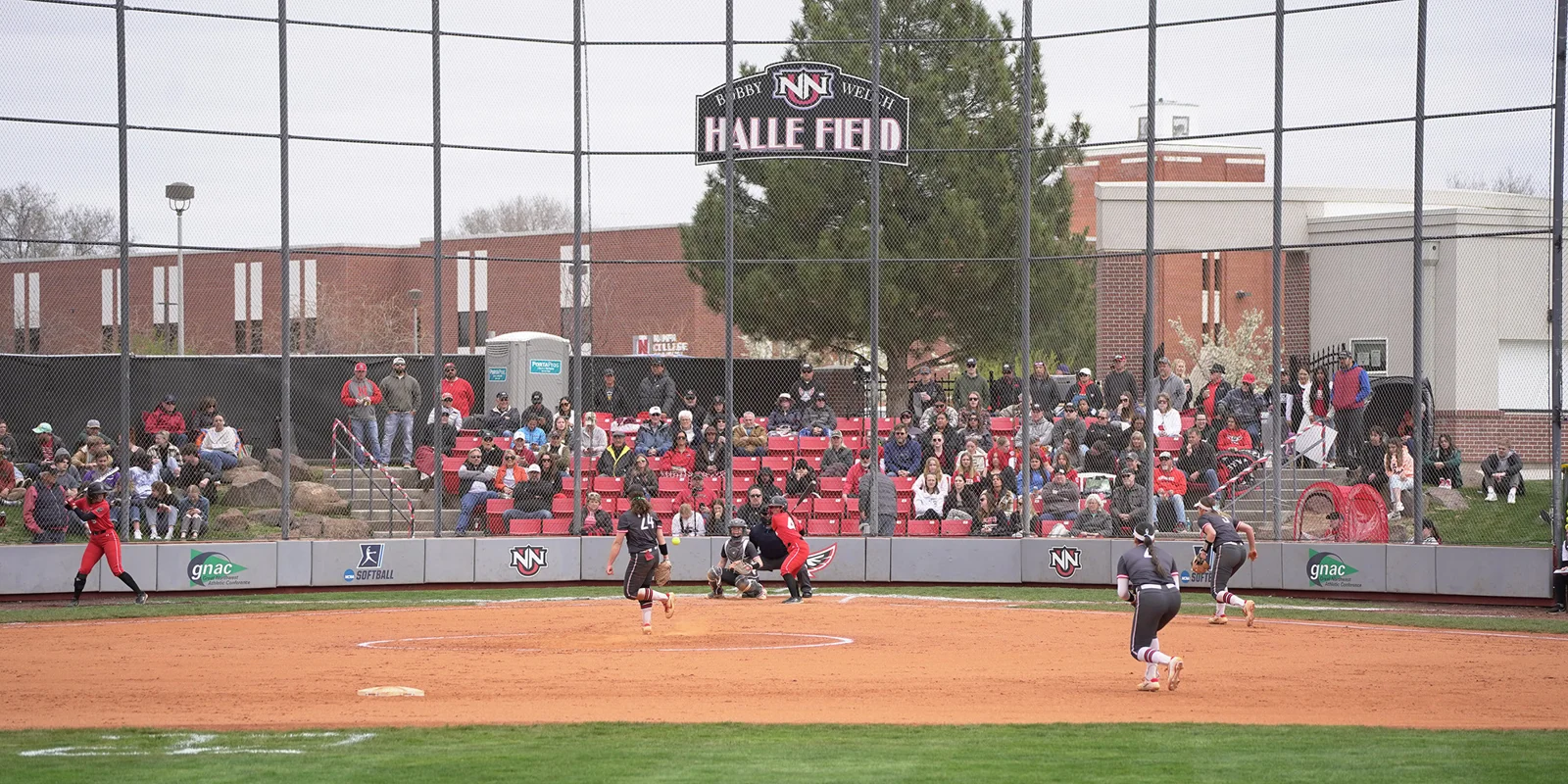
D2 softball colleges compete in NCAA Division II, with programs spread across different states and conferences. Start a search with the school, state and official softball page, then compare the schedule and roster that fit your purpose. The directory below offers 24 selected programs across the country. It is a practical starting list, not a complete national census or a ranking of the best schools.
What a D2 softball school listing should tell you
“D2” and “DII” are common shorthand for NCAA Division II. The NCAA's division overview describes a distinct membership and student-athlete model, including partial athletics scholarships. That institutional framework is useful background, but the softball question needs a sport-specific answer. A school can belong to a division without sponsoring every sport you want to watch. Check that the athletics site actually maintains a varsity softball program.
A useful entry should identify the full institution, state, conference and official softball portal. The full name prevents confusion between similarly named universities; the state helps narrow travel; the conference explains recurring opponents; and the portal supplies the next schedule update. A national list without direct school links leaves the reader doing the most important verification again. The directory here makes that next step accessible from each name.
Membership and conference information also need a date. This guide was checked in October 2026, so an archived result can belong to an earlier alignment. A new division or conference announcement may have a future effective season. Read the actual announcement before assuming it changes a completed schedule. For a school moving between divisions, confirm its current competition and championship eligibility rather than treating the word “member” as a complete answer.
The NFCA's Division II team directory is useful for extending the search beyond these selected schools. Its conference grouping helps reveal programs you might miss in a state-only search. Use that wider directory alongside current school information, especially when a name changes or a conference reorganizes. A shortlist should be easy to update when the underlying program changes.
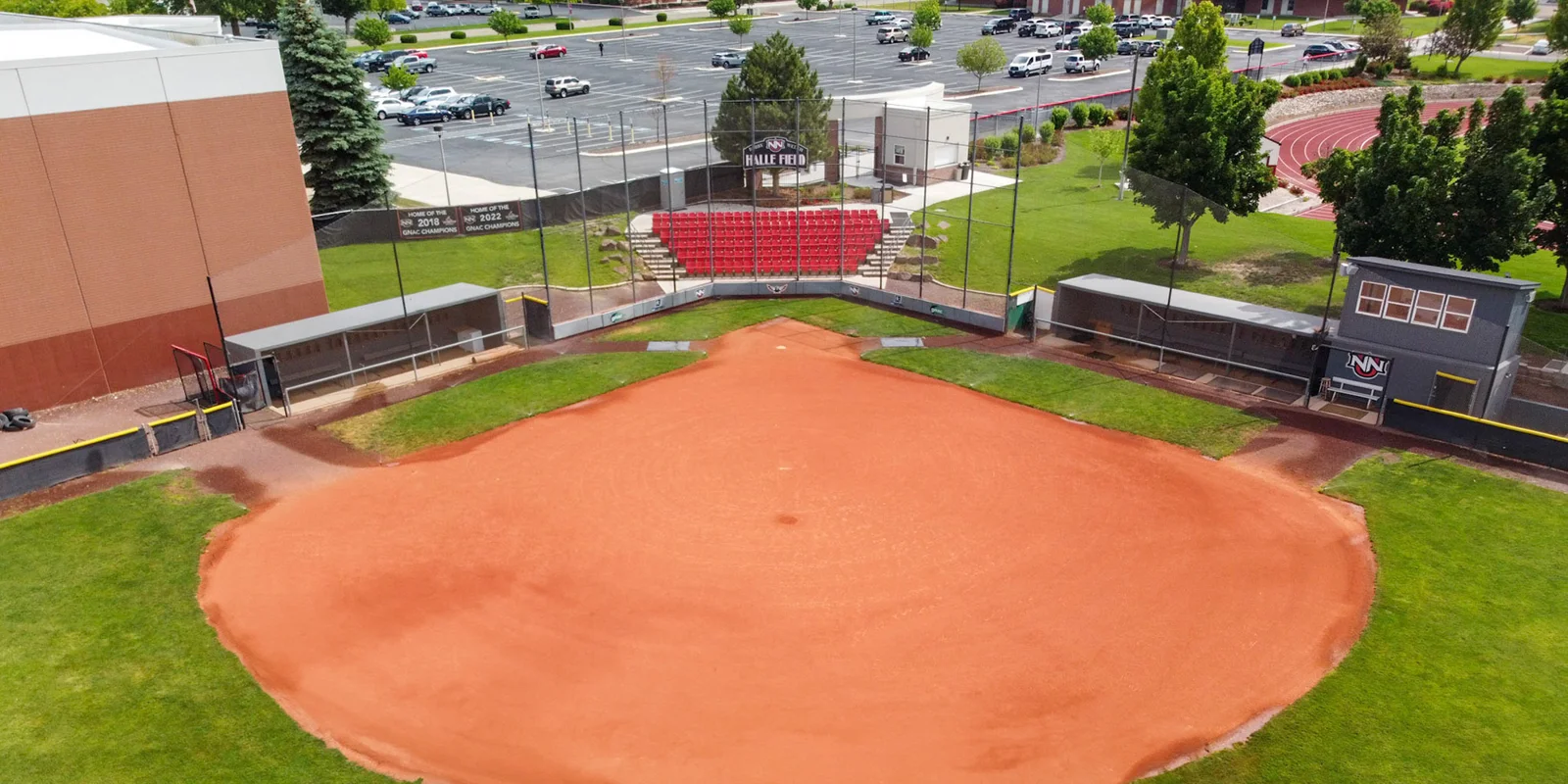
The photograph illustrates one real setting: Northwest Nazarene's Bobby Welch Halle Field. A facility page can answer questions that a list of colleges cannot, including the field's location and how it relates to the rest of campus. When choosing a game to attend, that information can be more immediately useful than a national reputation or a long trophy list.
Decide what the list is meant to do before comparing schools. A fan seeking a nearby Saturday doubleheader needs location and home dates. A supporter choosing a team to follow needs an accessible schedule, roster and coverage route. A prospective student needs academic and admissions information as well as the softball program. Those are related searches with different decisions at the end, so no single ordered list can substitute for all three.
A selected state-by-state directory of D2 softball colleges
These 24 selected programs cover 19 states and several conference settings. Each school name links to official softball information; the Tampa entry uses its conference's 2026 schedule archive. Use the state and conference labels to narrow geography and understand recurring competition. The grouping below is for browsing; it does not assign a national tournament region or imply that these are the only programs in any state.
West and Mountain states
California | CCAA
California | CCAA
California | CCAA
California | PacWest
Colorado | RMAC
Idaho | GNAC
Oregon | GNAC
Washington | GNAC
California shows why a state filter is only the first step. Chico State, Cal State Dominguez Hills and Cal State San Marcos are in the California Collegiate Athletic Association, while Biola's conference is the Pacific West. A reader comparing California options should therefore inspect more than one league schedule. The same state can contain programs whose regular conference opponents are different.
For the Northwest examples, GNAC means Great Northwest Athletic Conference. NNU, Western Oregon and Western Washington give a fan in that wider area several schools to investigate. Colorado Mesa adds a Rocky Mountain Athletic Conference option. Do not treat “West” in this browsing guide as a travel estimate: measure the actual route from your location and confirm whether the game is at the listed school's home field.
Central states and the Great Lakes
Indiana | GLVC
Michigan | GLIAC
Minnesota State University, Mankato
Minnesota | NSIC
University of Central Missouri
Missouri | MIAA
University of Central Oklahoma
Oklahoma | MIAA
Oklahoma | MIAA
Texas | Lone Star
Texas | Lone Star
Keep the full campus name attached. University of Indianapolis is the UIndy program in this list; it is not a generic reference to any university in Indiana. Minnesota State, Mankato is also a specific institution, rather than a label for every Minnesota state university. UT Tyler and West Texas A&M are different Texas programs. Those distinctions matter when a search result shortens a name or a scoreboard displays only an abbreviation.
The Great Lakes Valley Conference, Great Lakes Intercollegiate Athletic Conference and Northern Sun Intercollegiate Conference offer different league contexts. Central Missouri, Central Oklahoma and Rogers State share the Mid-America Intercollegiate Athletics Association. If you are following a conference race, those connections are more useful than state borders alone. Open the relevant standings after choosing a school so you can connect a series result to its league significance.
South and East
Georgia | Peach Belt
New Hampshire | Northeast-10
New Jersey | CACC
New York | Northeast-10
North Carolina | South Atlantic
Pennsylvania | PSAC
Tennessee | Gulf South
This group provides entry points into several more leagues: the Sunshine State, Peach Belt, South Atlantic, Gulf South, Northeast-10, Central Atlantic Collegiate Conference and Pennsylvania State Athletic Conference. The abbreviations CACC and CCAA are particularly easy to confuse; they refer to different conferences in different parts of the country. Follow the school's linked league rather than choosing one from an approximate acronym match.
If your state is absent, use the broader NFCA directory to continue. An omission from this selected list does not mean a state has no D2 softball. For someone near a state line, a program across the border may also be a better practical fit than a farther school in the same state. Build a travel shortlist from actual locations, then let the schedule show which of those programs has a home game on your available date.
Compare programs through schedules and rosters
After geography, compare what you can actually follow. Open a school's schedule, roster and results, and keep their season labels aligned. A new roster may be available before the full spring calendar, while an older schedule remains online as an archive. The Northwest Nazarene 2026 schedule is a historical reference; its opponent list should not be copied into a future trip plan without a new announcement.
Read the balance between home dates, away series and neutral tournaments. A fan choosing a nearby team may value several accessible home weekends more than a widely promoted early-season tournament in another state. For an ongoing supporter, the conference opponents create a storyline: a series can influence a league race even when neither team is appearing in a national poll. The same final score can mean something different in a nonconference game and a crucial conference series.
Use the UIndy roster, or the roster link at another selected school, to learn positions and player backgrounds. A roster position is useful orientation, not a promise of a starting assignment. Check the actual lineup when the game begins. If you are comparing a returning team with last year's results, distinguish players confirmed on the new roster from those who appeared only in the old statistics.
For performance, choose a question that the data can answer. To understand a pitching staff, compare innings, strikeouts, walks and runs allowed over a consistent period. To understand an offense, look beyond batting average toward the ability to reach base and create extra-base damage. A series box score can show how those strengths met a particular opponent. It cannot prove that one school would dominate every team in another conference.
Decide whether you want a nearby game or a longer-term team to follow
For a single visit, reduce the list to three realistic schools and check the same available date on each schedule. Record the opponent, city, field and first pitch, including the stated time zone. Then compare admission and the rest of the trip. This is a better way to answer “near me” than assuming a school is convenient because it lies in your state. The game itself may still be away that weekend.
For a team to follow all spring, check how easy it is to find game coverage and how clearly the school updates its results. Read a few recent recaps to understand the conference context and the players' roles. A program with an accessible stream and a useful box score can offer a rewarding season of watching even if its name is unfamiliar. Let the actual experience of following the games inform the choice.
Use the NCAA's Division II softball hub when the question becomes national DII scores or championship coverage. A coaches' poll, conference standing and national bracket answer different questions. A poll position is an assessment at a particular time; it should not be treated as a guaranteed result in the next series. Keep the division attached when searching so a D1 television listing does not accidentally become your D2 viewing plan.
Turn a school list into a game-day plan
Choose a specific home date before searching for tickets. The school portal should lead you to the host's current admission instructions, while the schedule establishes which event you are buying. Confirm the year and the opponent, particularly when an old postseason listing remains in search results. A ticket product with a familiar school name can still belong to a different sport or a completed season.
For a doubleheader or tournament, establish what the admission includes. The number of games, seating arrangements and re-entry terms can affect the value for your party. Compare the complete cost, including the travel you actually need, rather than assuming every D2 game has the same price. Our college softball ticket guide provides a useful set of purchase questions; the chosen host supplies the applicable event terms.
Open the facility page as well. Confirm the field's campus location and the latest parking instructions, then allow time to reach the entrance. If accessibility or a particular seating arrangement matters, resolve it with the host before committing to the trip. A photograph can orient you, but it cannot establish that a particular space is available on game day. Check weather and schedule notices again before departure.
To watch remotely, use school-linked coverage. UIndy's live events hub and Northwest Nazarene's coverage page illustrate the approach: start with the institution, then identify the sport and matchup. A shared athletics calendar can contain several sports at once. An available live video tile is useful only when its date and opponent match the softball game you want.
Follow the individual game's watch route and read any access requirements there. Different hosts and competitions can use different providers; there is no basis for promising that every D2 game is available through one free service. If only live statistics are listed, keep that page open for lineups, pitching changes and the inning situation. Afterward, use the final box score and recap to connect the results to the series.
If your purpose also includes choosing a college, move from the athletics portal to the institution's official academic and admissions pages. Compare the actual degree program, entry requirements and costs. The Division II label does not describe an individual financial-aid offer. Ask the school what a proposed package covers, what conditions apply and which amounts are confirmed. A roster opening and an admissions decision are different questions.
Current student-athletes considering a move should use the NCAA's division-specific transfer resources and their institution's compliance staff for the path that applies to them. A public school directory cannot determine personal eligibility or transfer permission. Keeping those questions with the appropriate office allows the softball shortlist to remain what it does best: a useful map of real programs and official next steps.
Save the schools you genuinely want to follow, then return to their current schedules as the spring approaches. Use this site's daily listings for included games, with the official D2 sources above for program-specific coverage. A short list becomes valuable when it leads to a real first pitch, an informed box-score conversation or a well-planned visit.
Join the conversation
Share a question or a thought about college softball. Comments are reviewed before they appear. Keep it friendly and on topic.
No comments yet. Start the conversation.
Sign in with Google to leave a comment. Your email address is not displayed.