NCAA Division III softball combines a national championship with a large network of campus teams and conference rivalries. To find a program near you, begin with the NCAA's school and sport directories, then verify the team's current schedule and league. This guide explains what D3 means, offers geographic starting points and shows how to follow the games without confusing college divisions. School and source information was checked October 21, 2026.
What playing NCAA Division III softball means
Division III is one of the NCAA's three competitive divisions. Its identity includes an educational model in which athletics is integrated into the wider college experience. The label tells you about the institution's association, governance and financial-aid framework; it is not a scouting grade assigned to every player on its softball roster.
The clearest financial distinction is that NCAA Division III schools do not offer athletics scholarships. The NCAA's financial-aid explanation also makes clear that other aid may be available. Academic scholarships, need-based assistance and institutional programs are different categories from an award based on athletic participation or ability. Availability depends on the school and the student's circumstances.
For a family comparing colleges, that distinction changes the useful question. Ask the financial-aid office for the full cost and the actual package available, including renewal conditions. Do not compare one school's published tuition with another school's estimated net price, or assume a coach can replace a missing athletics scholarship with an equivalent academic award. A softball conversation and a financial-aid determination have related but separate purposes.
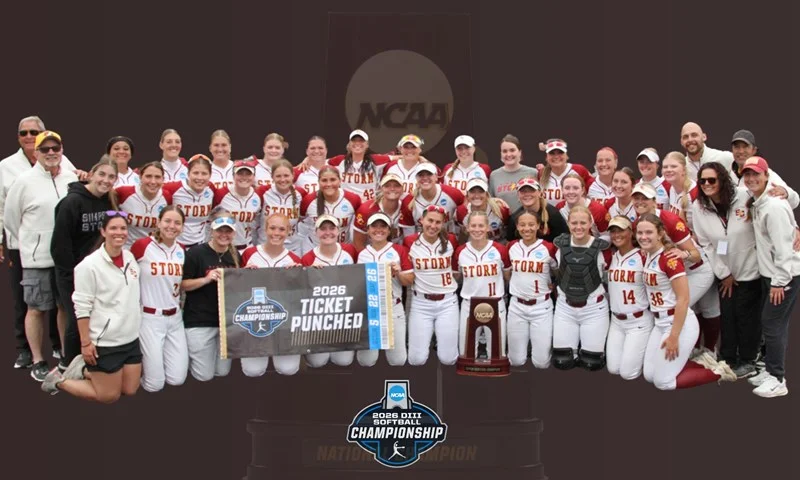
For fans, the absence of athletics scholarships does not mean an absence of serious competition. Programs still develop pitchers, build lineups and compete for conference and national opportunities. The American Rivers Conference's 2026 Simpson preview, for example, describes a Division III program returning to the national championship stage. That is a specific competitive achievement within this division, rather than a claim about how it would finish in a different association.
When watching, evaluate what is happening in front of you. A pitcher locating a changeup against an aggressive order, a catcher controlling the running game and a defense converting difficult chances remain meaningful softball skills. A school's division alone does not explain whether its current pitching staff is deep, whether its offense gets on base or whether this year's roster is experienced.
Be equally careful with the shorthand “D3.” In a search result it may refer to NCAA Division III, a junior-college division, a high-school classification or another organization's competition. Those labels do not identify the same schools or championship. Check the association as well as the number before treating a list, ranking or score as NCAA DIII softball information.
The NCAA's Division III overview is a useful starting point for the institutional model. For choosing a team to follow, the next task is more concrete: locate an actual varsity softball program, confirm where it plays and identify its current conference. That turns an abstract division label into a school and a season you can track.
Find Division III softball colleges by state
A useful state search needs two filters: an NCAA Division III institution and an active varsity softball program. A list of every DIII college does not necessarily satisfy the second requirement. Nor does a map of softball fields establish that a nearby university sponsors the varsity team you want to watch. Start with institutional and sport records, then add the practical location information.
Start with the NCAA directory and confirm the sport
The NCAA Division III member-schools page provides access to its membership and sport-sponsorship information. Use that as your national starting point. Narrow by your state and the women's softball program, and check the applicable academic year. If the school appears only in a general institutional list, open its athletics site and verify a varsity softball schedule and roster.
For an additional sport-specific cross-check, the NCAA publishes a 2026–27 Division III softball regional alignment document. It groups programs by NCAA region and conference, with notes for provisional status. Search within that document for the full school name. It is particularly helpful when an abbreviated name on a score page could refer to more than one institution.
Membership and championship eligibility are related questions with different answers during a transition. Read the document's status notes instead of counting every listed school as an automatically eligible NCAA tournament participant. Likewise, keep the document's year attached to any saved list; conference moves and institutional changes can make an older directory misleading even when the school names remain familiar.
Use school examples to narrow the map
These 23 programs are representative starting points across 21 states, with official softball sites. Conference affiliations follow the NCAA's 2026-27 softball alignment. These are not a complete national or statewide directory, and their order is geographic illustration rather than a ranking of teams or academic institutions.
Once one school matches your area, open its conference's softball directory to locate additional opponents. That provides a second set of nearby possibilities, although conference boundaries need not match state boundaries. For a border community, an out-of-state school can be easier to reach than a program on the opposite side of your own state. Compare actual driving distance and the game location.
A nearby campus does not guarantee a nearby game
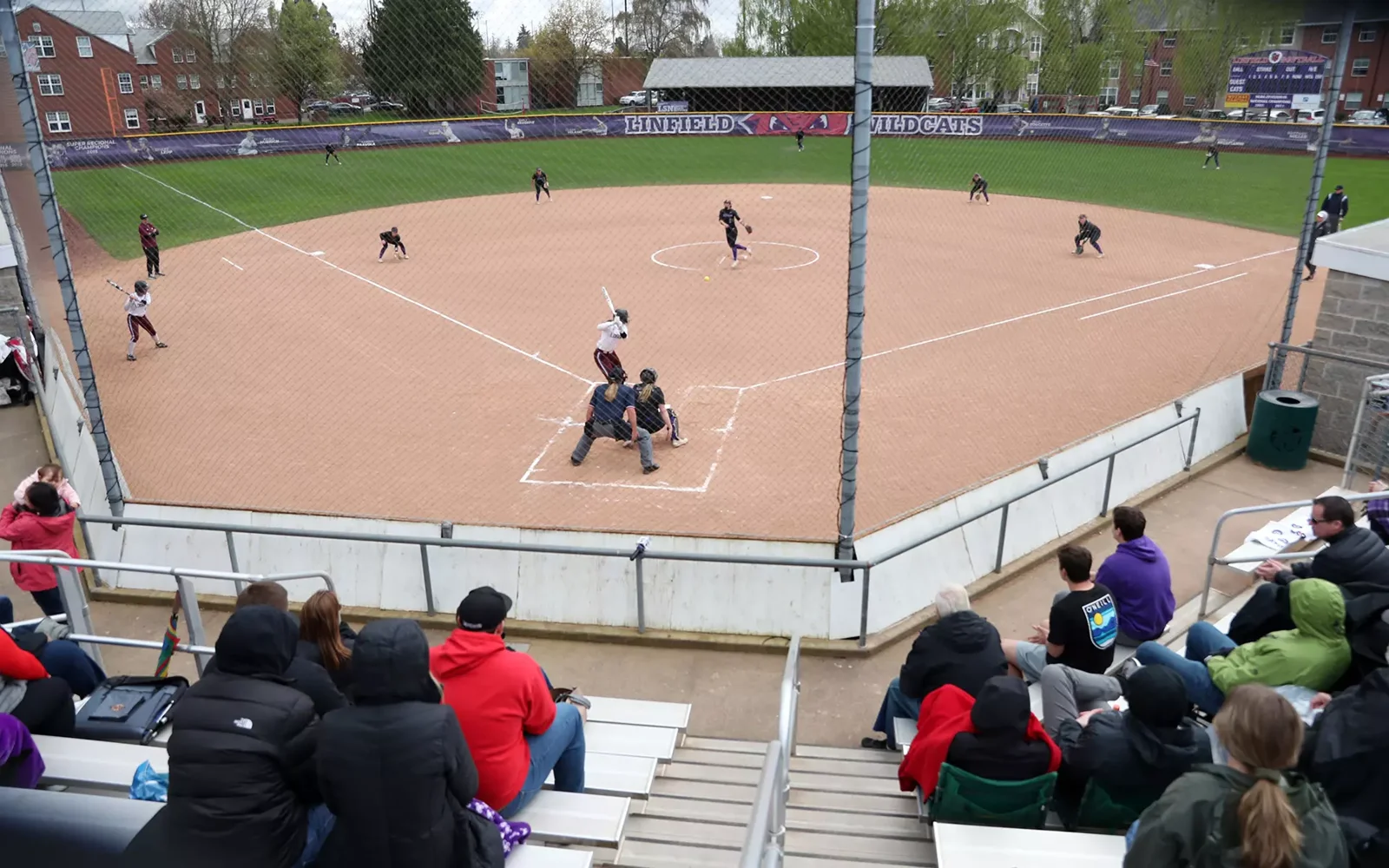
Check home, away and neutral-site labels before treating a school search as a local event search. MIT's archived 2024 schedule, for example, includes both Cambridge home dates and a spring-break trip to Florida. That is a historical illustration of the distinction, not a 2027 schedule recommendation. A nearby team's next fixture can still require a flight.
Finish your search with the actual date, facility, opponent and admission information. Find the softball diamond on the school's venue map rather than navigating to the main admissions office. Confirm whether a doubleheader uses one admission or separate arrangements, and check for recent postponements. Those details make “D3 softball near me” a usable game plan instead of a list of campuses.
Conferences explain the local season
A school's conference gives the season its recurring opponents and a second way to discover teams. The NEWMAC softball hub, for example, provides league events and results, while the American Rivers Conference hub includes standings and championship information. Following the league alongside the school makes it easier to understand what a particular result changes.
Three geographic labels are worth keeping separate. A state describes where the school is located. A conference describes its league affiliation. An NCAA region groups programs for the division's administrative and championship framework. They can overlap on a map without becoming interchangeable. The NCAA alignment document is organized by region and then lists conference members, rather than presenting a state-by-state league system.
Trine is a useful reminder: its Indiana campus competes in the Michigan Intercollegiate Athletic Association. A conference name is not a rule restricting every member to the named state. Similarly, a school outside your state might be one of the opponents your local team faces most regularly. Read the current membership list instead of eliminating a team because a league's name sounds geographically unfamiliar.
Standings need their own context. The overall record summarizes the games included in that season's total; the conference record isolates league competition. A strong nonconference start can coexist with a difficult position in the league table. When discussing a team's conference title chances, use the correct column and then check how many conference fixtures remain. A long schedule still to come can make an early table look more settled than it is.
For a weekend with several important games, check the league's composite schedule before deciding which result to follow. You may care about your own team's contest and another matchup affecting the same standings. Afterwards, use the official results and standings rather than trying to reconstruct a table from social posts that may have been written before the second game of a doubleheader ended.
The conference tournament is another distinct event. Do not assume every league admits the same number of teams, uses the same seeding method or breaks a tie the same way. Open that year's championship page for the format and qualification rules. A national ranking beside a team's name does not itself determine its place in the conference bracket.
A practical bookmark set is therefore small: one team schedule, one league softball page and the league's current championship information. Those sources answer different questions without requiring dozens of repeated searches. Use the NCAA's wider documents when the question changes from the local standings to national championship eligibility, alignment or selection.
Follow a team from its opener to the national tournament
Once you choose a program, follow its actual season rather than searching the same broad phrase every week. Save the official schedule, roster, statistics and team news. Add the conference page for the league context and the appropriate national sources when postseason questions arise. This gives each type of information a reliable home.
Read schedules and statistics with their context
Start with game status. A postponed fixture does not produce a loss, and a doubleheader has two separate outcomes even when the games share a date and opponent. MIT's 2026 schedule archive illustrates these distinctions with postponed entries, individual final scores and innings notes. Check whether the second game is final before calling a day a sweep.
For a player you want to follow, confirm the roster year and full name before using a statistics table. Then read the opportunities behind the rate. A hitter's batting average describes hits per at-bat, while walks contribute to reaching base without increasing at-bats. A short hot stretch is interesting, but its meaning changes when the player has only a handful of opportunities. Use the game log to see when those opportunities occurred.
For pitching, pair the rate with innings and opponent context. A low ERA over a small relief sample is different from the same rate across a substantial starting workload. Look at strikeouts and walks together to understand how often a pitcher is controlling the plate appearance, and use the box score to separate earned runs from the team's total runs allowed.
Innings notation also deserves attention: a line ending in .1 or .2 records one or two outs beyond the completed innings, rather than a decimal tenth or fifth of an inning. If you calculate a rate yourself, convert outs correctly. This small reading detail prevents a confident-looking calculation from being wrong before any comparison begins.
When watching remotely, follow the actual game link from the school or conference. A live-stat feed is not the same as live video, and an archived replay is not a current broadcast. Check the provider and any access requirements for that event. DIII games are not all carried on ESPN, nor does the division label guarantee that every stream is free.
Keep polls, selection and the national bracket separate
The NFCA publishes a separate Division III coaches poll. Make sure the heading says NCAA DIII before comparing teams; its directory also includes Division I, Division II, junior-college and other polls. A Top 25 number without the organization and division is incomplete information.
The NCAA's Power Index resources address a different part of the national picture. NPI and a coaches' vote should not be treated as interchangeable lists. When the question is about selection or seeding, use the current softball championship materials and their applicable season, rather than assuming a poll position is a guaranteed berth.
After selection, the bracket tells you who is actually participating and where teams must advance. Before selection, a possible national date on a school's calendar is still a placeholder. The NCAA currently lists the 2027 DIII finals for June 3–9 at Workman Family Softball Field in Decatur, Illinois. That identifies the scheduled destination, not its future field of teams.
For a new fan, the most rewarding route is to follow the same roster through those changing contexts: the early games, the local league race and whatever postseason the team earns. The school, conference, poll and NCAA bracket each explain a different part of that story. Keeping them distinct makes the season easier to understand and the important games easier to find.
Keep a short notebook of questions rather than only a running list of scores. Who is starting the second game? Has a hitter moved up the order? Did the team win with extra-base damage or by putting runners on and advancing them? Return to the official box score after watching and see which impressions the record supports. The purpose is not to turn every small sample into a prediction. It is to notice the specific choices and performances that make this roster different from the one you followed last spring.
Join the conversation
Share a question or a thought about college softball. Comments are reviewed before they appear. Keep it friendly and on topic.
No comments yet. Start the conversation.
Sign in with Google to leave a comment. Your email address is not displayed.