The NCAA Division II softball championship advances through four-team regionals, best-of-three super regionals and an eight-team finals event. For the 2027 season, there is also a major selection change: Division II team sports move to the NCAA Power Index, or NPI, beginning in the 2026–27 academic year. Understanding that transition is as important as understanding the bracket. Sources below were checked October 21, 2026.
The selection rules are changing for the 2027 tournament
The NCAA's current Division II priorities identify 2026–27 as the first academic year of NPI selection for team sports. Spring 2027 softball falls within that year. An explanation of how the 2026 field was evaluated therefore cannot simply be relabelled as the 2027 selection process.
The latest complete softball prechampionship manual linked on the NCAA's DII sport page at this check is the 2025–26 edition. It remains useful for the verified tournament architecture and explicitly dated historical information. Use current legislation and NPI materials for the selection change, then check the next softball manual for the coming season's final details.
Automatic qualifiers still leave an at-large field
Automatic qualification and at-large selection are two routes into the championship. A qualifying conference designates its automatic entrant through its approved process. Teams without that berth may be considered for the remaining field under the applicable NCAA rules. Finishing behind another team in a conference tournament does not automatically answer the at-large question.
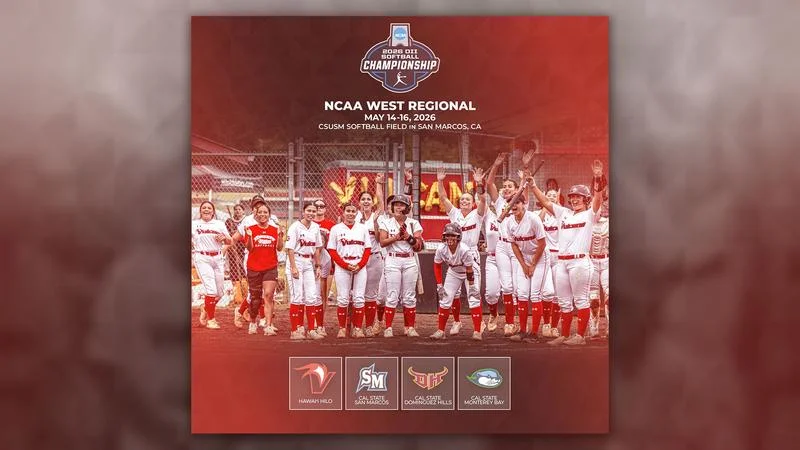
Hawai‘i Hilo's 2026 selection announcement provides a historical example: the school reported a fourth-place finish in its conference postseason tournament and then an NCAA West Regional invitation. That illustrates the distinction between a conference result and national selection. It does not promise that a fourth-place finish earns a berth in a future season.
Division II's regional allocation remains part of interpreting at-large selection. The NCAA's NPI overview specifically notes this DII consideration. Do not assume that a national numerical list is simply cut off at one position to create an unrestricted national field. Qualification, eligibility and the sport's regional framework still have to be applied.
Use NPI rules for the applicable season
The current Division II legislation, Bylaw 18.4.3.1, requires applicable team-sport selection through NPI after student-athlete availability and nullification are addressed. It also retains scheduling requirements for consideration. An attractive index number does not cancel those conditions.
The DII softball NPI report sets the posted winning-percentage/strength-of-schedule weighting at 25/75 and explains the sport's additional settings. NPI strength of schedule uses opponents' NPI values. A coaches' Top 25 is a different voted list and should not be labelled the NCAA's selection order.
The NCAA's DII NPI reference guide also says regional advisory committees are eliminated in team sports using NPI, along with the old regional-ranking process. References to committee regional rankings in a 2026 recap describe the earlier season. For the 2027 race, establish the current NPI position and applicable regional allocation instead of repeating that old process.
Selection becomes a concrete itinerary only when the NCAA announces the field and sites. Until then, a scheduled postseason window or a favourable poll is context, not an invitation. Once the bracket appears, its named participants and assigned regional supply the starting point for following a team.
Two regional brackets feed each super regional
The latest linked manual provides for 64 teams at sixteen four-team regional sites. The regional organization covers eight regions: Atlantic, Central, East, Midwest, South, South Central, Southeast and West. Each region's two four-team brackets produce the opponents for its super regional. That paired structure explains why a regional title is one step short of becoming the region's finals representative.
Cal State San Marcos' 2026 West Regional announcement gives a concrete example. Its site contained the region's Nos. 1, 4, 5 and 8 seeds. The other site contained Nos. 2, 3, 6 and 7. The two site winners were to meet in the West Super Regional. Those are regional seed labels in a dated bracket, not claims that all eight teams held those positions nationally.
Inside each four-team bracket, double elimination means a team is eliminated on its second loss in that regional. The two opening winners meet on the undefeated path, while the opening losers face immediate elimination. A first loss is damaging because it lengthens the route; it is not necessarily the end of the season.
Consider fictional Team A reaching the regional final without a loss. Its challenger has already lost once. If A wins the first final meeting, the challenger receives its second loss and A advances. If the challenger wins, both teams have one loss and another game is required to settle the bracket. That is the purpose of the “if necessary” final.
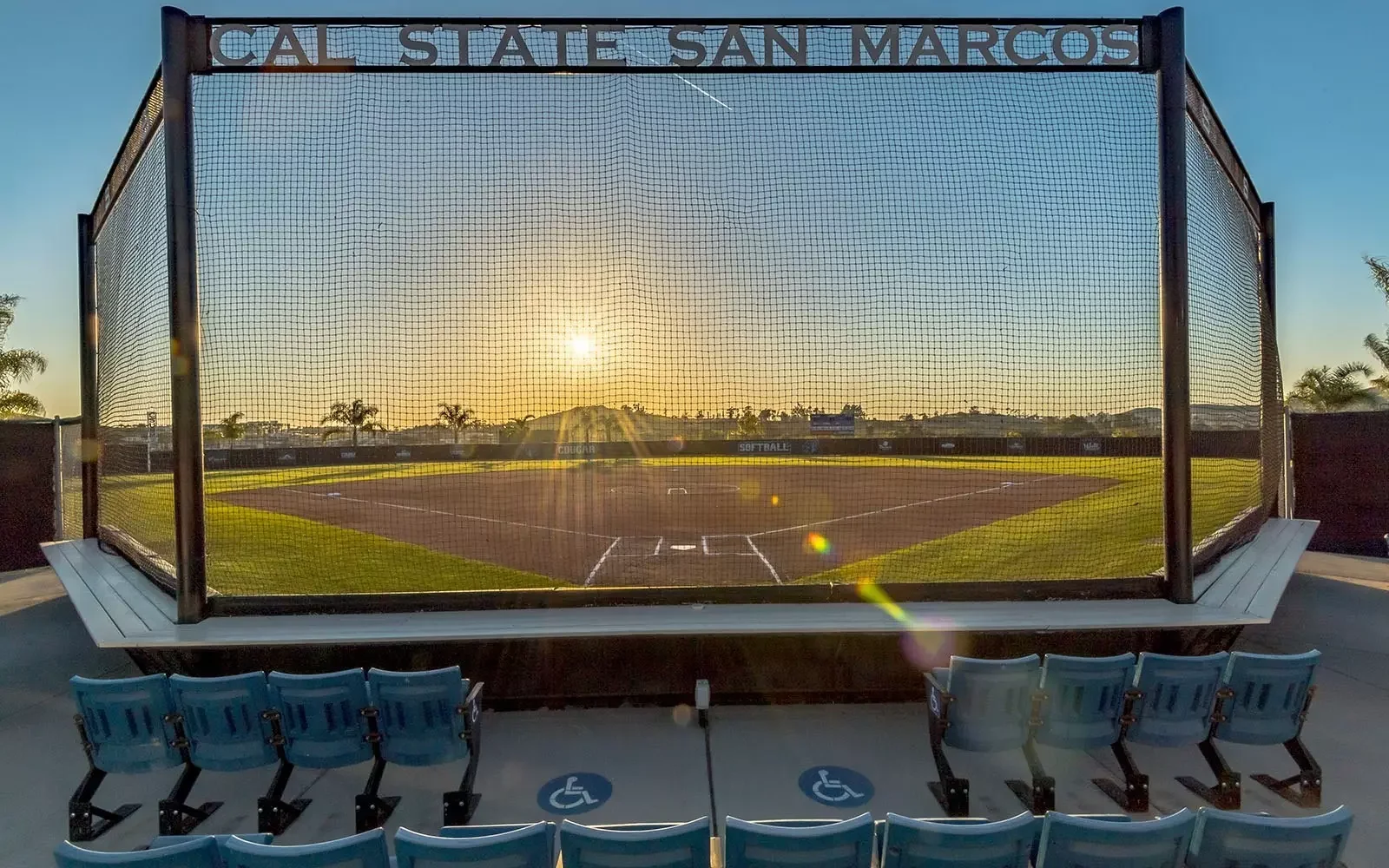
The CCAA's opening-round report described this two-site arrangement in 2026 and the opening losers moving into elimination games. For following a specific team, save its own four-team bracket first. Jumping between the two sites without their labels can make a normal game sequence look as though an opponent has appeared from outside the field.
A regional winner starts a new best-of-three series
The two regional-site winners meet in a best-of-three super regional. Each begins that series at 0–0, regardless of whether it won its regional undefeated or needed the additional final. The season record still includes every earlier result; the new series has its own count. The first team to two series wins becomes that region's representative at the finals.
A sweep ends the super regional after two games. If the teams split, game three decides who advances. The manual describes a two-day arrangement, with the first game followed by the second and, if needed, third on the next day. Weather and approved changes can affect the actual timetable, so use the current host schedule rather than treating that pattern as an unchangeable start-time guarantee.
The switch also changes what to watch tactically. A four-team regional can demand preparations for several different lineups. A super regional concentrates the contest on one opponent, giving hitters and pitchers another look at each other. Follow adjustments in pitch selection, defensive positioning and the batting order, while checking actual pitching appearances before assessing availability.
Winning quickly can reduce the games required, but game count alone does not measure workload. Two long games and two short games can demand very different innings from a staff. Use the box scores and the spacing between games to make that comparison. The series record explains advancement; the inning totals explain how the pitching was distributed.
The eight-team finals end with a championship series
The eight super-regional winners reach the national finals. They enter two four-team double-elimination brackets, whose winners meet in a separate best-of-three championship series. The NCAA's 2026 finals bracket shows the distinction clearly: conditional games can decide the two bracket winners before the title series begins. Its printed dates belong to 2026.
For the 2027 tournament, another detail matters before the opening finals game. The NCAA's Division II NPI guide says that sports reseeding at the final site use NPI updated with postseason results. Softball is among those sports. A finalist's original regional seed therefore does not lock in its finals seed. Wins earned during the regional rounds become part of the information used for this later seeding step.
Read the new bracket when it is released rather than carrying over the regional matchup order. A No. 1 label at a regional site and a No. 1 label at the national finals describe different fields. The first identifies a position within that region; the second places a surviving team among the eight finalists.
Loss accounting also begins again at this stage. A team that lost a regional game can arrive at the finals with the same clean bracket record as an undefeated regional winner. Inside its finals bracket, however, a second loss ends its tournament. The side advancing to the championship series then begins a new best-of-three contest, without a one-game handicap for an earlier finals-bracket loss.
For example, imagine a finalist losing its opener, recovering through the elimination path and winning its side. Its opponent might have advanced without losing a game. Both still need two wins in the title series. If they split the first two meetings, the third decides the champion. This is a fictional illustration of how the stages connect, rather than a prediction about any selected team.
Saint Leo University's June 2026 championship-series notice provides a dated example of the final step: Saint Leo and McKendree were preparing for a best-of-three series in Chattanooga. The Division II event has its own venue and bracket. Oklahoma City's Division I Women's College World Series arrangements do not describe this championship.
When watching the finals, keep the current bracket beside the score feed. A result can have very different consequences depending on whether it is an opening game, an elimination game, a conditional bracket final or a championship-series meeting. Identifying that stage first makes the standings much easier to interpret.
Follow the correct season, site and game
A dependable tournament plan needs three details together: the season, the round and the host. The national finals calendar can be published while earlier-round hosts and opponents remain undecided. Likewise, an official page can contain a current event announcement alongside a manual or bracket retained from the previous season. Read the year attached to each document.
What the published 2027 dates tell you
As checked on October 21, 2026, the NCAA Division II softball championship page lists the 2027 finals for June 3-9 at Frost Stadium at Warner Park in Chattanooga, Tennessee. The future-dates table in the linked prechampionship manual supplies the preliminary-round windows as well.
| 2027 round | Published window |
|---|---|
| Regionals | May 20-22 |
| Super regionals | May 27-28 |
| National finals | June 3-9 |
These dates identify rounds, rather than a completed game-by-game schedule. They do not establish a particular team's first pitch, its opponent or a campus host. Nor does a three-day regional window mean every team plays on every day. Elimination, conditional games and schedule changes affect how the window is used.
If you are researching the 2026 tournament, keep the archived 2026 bracket open instead. Its results remain useful history, but its May and June dates should not be placed on a 2027 travel calendar. Conversely, a future championship window cannot answer which team won an earlier tournament. Keeping those jobs separate avoids a common source of confusing search results.
Use host pages for admission and viewing details
Once hosts are announced, go from the selected school's official softball page to its tournament central. Cal State San Marcos' 2026 West Super Regional page is a useful example of the information to look for: tickets, venue, parking, live statistics, video and the conditional third game appeared together. Its prices and viewing offer describe that event, rather than an advance offer for 2027.
Before buying admission, read what the ticket covers. Check whether it is for one game, a session or the tournament, and whether the host states a re-entry policy. A ticket for a campus regional should not be assumed to cover the super regional or national finals. Use the seller linked by the current official host when comparing available options.
The San Marcos example shows why the details matter. Its 2026 page listed $10 general admission and $6 categories for children aged 3-12, students with identification, seniors and military spectators. It also identified free parking in Lot Z. These are concrete terms from one past host, rather than a Division II price schedule. A family checking a future event needs the current age bands, required identification and parking instructions, as well as the headline admission price.
For remote viewing, open the individual game's watch link. Confirm the provider, access requirements and scheduled start on that page. An archived reference to a free stream does not establish the next season's access terms. Live statistics are useful while video is delayed or unavailable, but a running score is not a final result until the game has ended.
The same distinction applies to devices. Saint Leo's 2026 title-series notice directed viewers to NCAA Championships Pass and identified Roku, Apple TV and Amazon Fire TV among its app options. Before inviting people to watch a later tournament, test the current official link on the device you intend to use. Check that the listing names the correct division, teams and round. An available app or replay listing by itself does not confirm that a particular upcoming game is included.
Finally, check the time zone printed on the current schedule and look for weather updates before leaving for the park. Later games can depend on completion of an earlier contest. Save the host page as well as your team's schedule: together they provide a clearer route from the published tournament window to the game you actually want to follow.
Join the conversation
Share a question or a thought about college softball. Comments are reviewed before they appear. Keep it friendly and on topic.
No comments yet. Start the conversation.
Sign in with Google to leave a comment. Your email address is not displayed.