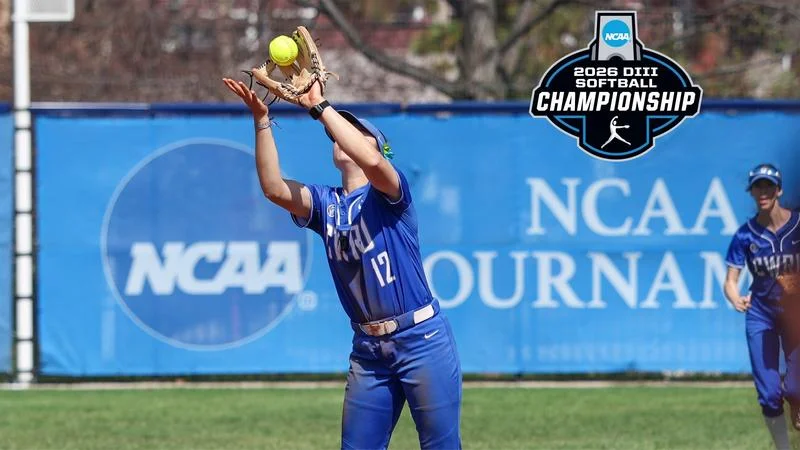
The NCAA Division III softball tournament moves through three stages: double-elimination regionals, best-of-three super regionals and an eight-team finals event that ends with another best-of-three series. Selection, seeding and the loss count are separate parts of understanding that route. This guide uses the latest full manual linked by the NCAA when checked October 21, 2026, and labels confirmed future information separately from the completed 2026 field.
How a team earns a place in the NCAA tournament
A place in the national tournament comes through an automatic qualification or an at-large selection. That is the first distinction to make when following a team's postseason chances. A conference result can settle one route, while the national selection process determines the remaining invitations. Being nationally discussed and being officially selected are different states.
The NCAA's 2025–26 prechampionship manual, the latest complete manual linked on its DIII softball page at this check, specified a 64-team 2026 field. Use that document for the verified framework and historical allocation; consult the next season's manual when it becomes available for that season's final allocation and any revised procedures.
Automatic qualification and the remaining field
For 2026, the manual listed 42 automatic-qualifying conferences and 22 at-large places. The AQ belongs to the institution qualifying through its conference's designated process. Check the league's championship rules to identify that process, rather than assuming the regular-season standings alone settle the invitation.
An at-large place addresses the remaining field after the automatic qualifiers are identified. Under the manual, the NCAA Power Index, or NPI, supplies the numerical selection framework. Losing the conference tournament therefore does not, by itself, answer whether a team can still receive a national invitation. It does mean the team must be evaluated through whatever remaining route applies, with no guarantee that one exists for its particular standing.
For a future season, do not copy the old AQ total into a new bracket preview without checking. The NCAA's 2026–27 softball alignment identifies current conference groupings and status notes, including provisional programs. Sponsoring a DIII team and being eligible for that season's NCAA championship are related questions that require the actual institutional status.
A coaches poll is not the selection list
The NFCA Division III coaches poll is a national voted ranking. It is useful for following teams, but its positions should not be read as NCAA bracket seeds or automatic invitations. The NCAA's selection and bracketing materials, rather than the poll number on a school graphic, explain the official field.
Selection, seeding and hosting also need to be read separately. The manual includes NPI-based bracketing principles alongside geographic and hosting requirements. A high numerical position does not remove the need for an acceptable hosting bid or guarantee that every proposed national matchup can be arranged without other constraints.
For fans, the practical milestone is the official selection announcement. Before it, discussion describes possibilities. After it, you can identify a named regional, its four participants and the published path forward. A school can place an NCAA date on its schedule in advance as a potential postseason window; that placeholder alone does not confirm its berth. Start the bracket conversation with the actual selected field.
Regionals require you to track two losses
The regional is a four-team double-elimination tournament. Within that regional, one loss sends a team onto a harder route; two losses eliminate it. Do not treat every game labelled “regional” as a single-elimination knockout. The official 2026 regional brackets show the winners' and elimination paths, including an additional final marked “if necessary.”
Follow a teaching example with fictional Teams A, B, C and D. If A wins its opener and the winners' game, it reaches the regional final undefeated. Another team must emerge from the elimination side to face it. That opponent already has a loss, so it needs to beat A twice to advance. A needs one final win because that would give the opponent its second loss.
If the one-loss challenger wins their first final meeting, both teams then have one regional loss. The additional game decides which takes a second loss and which advances. The extra game is not awarded merely because the winning score was close, nor is it played automatically every year. Its necessity follows the loss count.
The undefeated route can finish with three wins. A team losing its opener can still advance, but it must survive the elimination path and then beat the undefeated finalist twice, requiring four subsequent wins in a standard completed four-team bracket. Those additional games make pitching workload and recovery part of the competitive picture.
That workload does not automatically decide the result. It creates questions: which pitchers have already thrown, how many innings did the games require and who is available for another start or relief appearance? Check the actual box scores before claiming that a staff is exhausted. A short game, a shared pitching effort and a long extra-inning contest do not create identical demands.
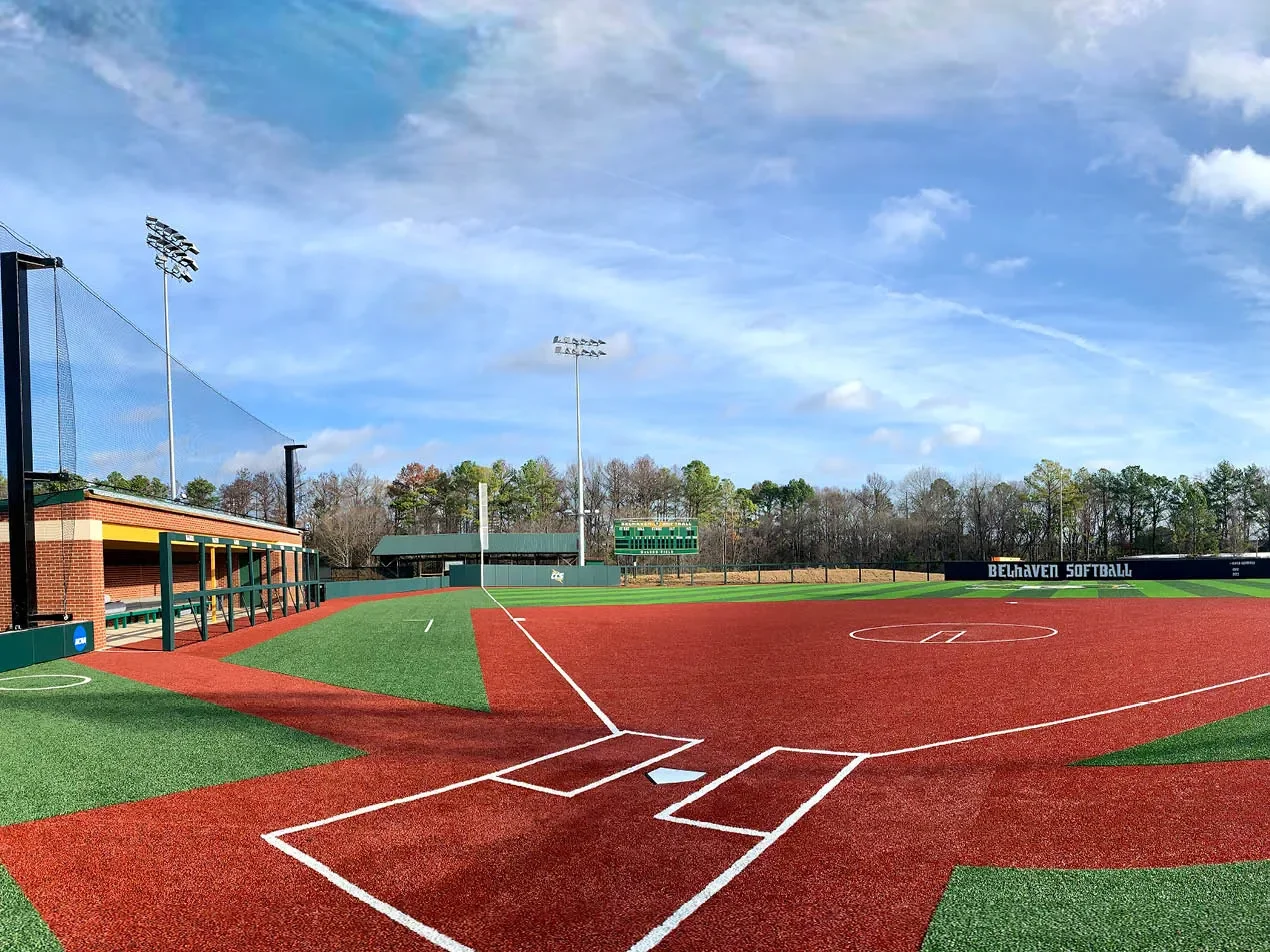
Use the host's event page with the bracket. Belhaven's 2026 regional page is an example of that local source. The NCAA bracket itself allows schedule revisions for weather and other accommodations. Keep your team's position on the bracket and the current start time together; a weather-adjusted time changes when you watch, while a result changes which branch you follow.
Super regionals change the question to two wins
The sixteen regional winners form eight two-team super regionals. Each is a best-of-three series: win twice to advance to the finals. A sweep ends it after two games; a split requires the third. The official 2026 super regional brackets show that series structure separately from the four-team regional brackets.
The location can change as well. Redlands' 2026 preview described advancing from its Iowa regional to a two-team meeting with Texas Lutheran in Seguin, Texas. That historical example explains why advancing does not necessarily mean staying at the same venue or playing the same collection of opponents.
The regional loss does not follow a team into the series
A team that survived a one-loss regional and a team that swept its regional begin their super regional with the same series record: 0–0. Their overall season records still include the earlier games. Their new best-of-three series does not preload one team with a loss because it took a longer route the previous week.
Imagine fictional Team A wins the first super regional game. A leads the series 1–0; its opponent must win the next two. If the opponent takes game two, the series is tied 1–1 and game three determines the advancing team. This sequence needs no extra regional-style reset final because the contest is already a two-team series.
For a spectator, repeated opponents make the adjustments easier to follow. Watch how hitters respond after seeing a pitcher, whether the defense changes its positioning and whether a staff uses a different starter or returns to the same pitcher. Those are questions to investigate in the games, not reasons to assume the opening result guarantees the next one.
The winner has earned one of the eight finals places. Check the official series page for whether a third game is needed before booking around it or opening a stream. Saint Mary's 2026 host page illustrates that event-specific schedule. A listed third game is a conditional appointment, rather than a promise that the teams will play three times.
Eight teams start a new championship at the finals
Reaching the finals changes the location and the field, but does not end the need to read the bracket carefully. The eight surviving teams are divided into two four-team double-elimination brackets. Each side produces one finalist, and those two teams meet in the championship series. Redlands' 2026 finals preview explains this structure from a participating school's perspective.
For 2027, the NCAA lists June 3–9 at Workman Family Softball Field in Decatur, Illinois, on its DIII championship page. This is the Division III destination. Do not use Division I Women's College World Series travel information for Oklahoma City as directions to this event.
Follow each side of the bracket separately
The first task is to identify the four teams on your side. Follow the winners' and elimination branches within that group. A team taking its first loss is still alive, while a second loss ends its progress through that bracket. An undefeated team meeting a one-loss challenger in the bracket final has the same basic protection described at regionals: the challenger must deliver two losses to eliminate it.
The finals bracket begins a new stage. Losing one game in the super regional does not mean a team arrives at the finals already one loss from elimination. That earlier defeat remains part of its season record, but the new bracket tracks results at the finals. Keep a small stage ledger if the broadcast mentions several different records during the same discussion.
For example, write “regional complete,” then the super regional series result, then the current finals-bracket wins and losses. A season record can contain several defeats while the team remains undefeated in this specific bracket. That is not a contradiction; the records are describing different scopes.
The physical workload still carries forward. A pitcher does not become rested simply because the tournament loss count starts again. When judging the next matchup, check days between games, innings and who has actually appeared. Bracket protection describes elimination risk, not medical clearance or guaranteed pitching availability.
The championship series has its own win count
The winners of the two four-team brackets meet in a best-of-three championship series. Each must win twice in that series. A finalist's earlier bracket loss does not count as an opening series defeat, and an undefeated finalist does not begin with a free series win. They have earned the same place in the final two-team contest.
A two-game sweep settles the title without a third game. If the teams split, the deciding third game awards the championship. The extra game in this series follows a 1–1 series tie; it is a different mechanism from the “if necessary” reset within a double-elimination bracket. Both create conditional fixtures, but their conditions should not be mixed.
This is why a single headline saying “final” may need another look. It could refer to a regional final, a four-team finals-bracket game or the championship series itself. Identify the stage and the record before concluding that one result crowned a national champion. The last stage always requires the necessary second series win.
Read the live bracket before booking or watching
The best planning source changes as the tournament develops. Before selection, use the published NCAA round windows and your school's qualification updates. After selection, use the named regional and host page. After advancement, move to the new series or finals page instead of continuing to refresh a regional schedule that has finished.
The manual's published 2027 windows are May 20–22 for regionals and May 27–28 for super regionals, followed by the June 3–9 finals. These establish the anticipated stages of the calendar. They do not supply every future matchup, venue assignment or first pitch. Confirm those details from the actual selected bracket when it is released.
- Check the division and year. The 2026 NCAA DIII bracket is a historical bracket. The NCAA DIII softball hub is a starting point for the division's current coverage. An archived result is not a future booking recommendation.
- Identify the stage and loss count. At regionals and within a finals bracket, track two losses. In a super regional or championship series, track the first team to two series wins.
- Check conditional games. A third series game and a double-elimination reset game require different preceding results. Wait for the condition to be satisfied before treating the game as confirmed.
- Open the host's current game links. Verify the date, time zone, facility, admission and watch provider for that exact event. Recheck after weather changes and after each result that changes the schedule.
A school page can list several useful links without promising that they all provide video. Saint Mary's 2026 super regional page separated its webcast, live statistics, ticketing and rosters. The webcast shows the game; the live-stat feed records its progress; the box score supplies the completed statistical record. Choose the one answering your question and check any access requirements on the actual viewing service.
For travel, read whether an admission covers a game, a day or the whole event. Host arrangements can differ across rounds and sites. A previous year's price or parking description can provide background, but it is not a commitment from the next host. Save the actual venue and admission page with your itinerary, and leave room for an “if necessary” game when following a team through the entire round.
For following from home, keep the current bracket beside the broadcast or live stats. When the game ends, update the team's route before looking for the next stream. That simple habit prevents most confusion: it connects the result you just saw to the next opponent, explains whether the team is still alive and tells you which conditional game has become real.
Join the conversation
Share a question or a thought about college softball. Comments are reviewed before they appear. Keep it friendly and on topic.
No comments yet. Start the conversation.
Sign in with Google to leave a comment. Your email address is not displayed.