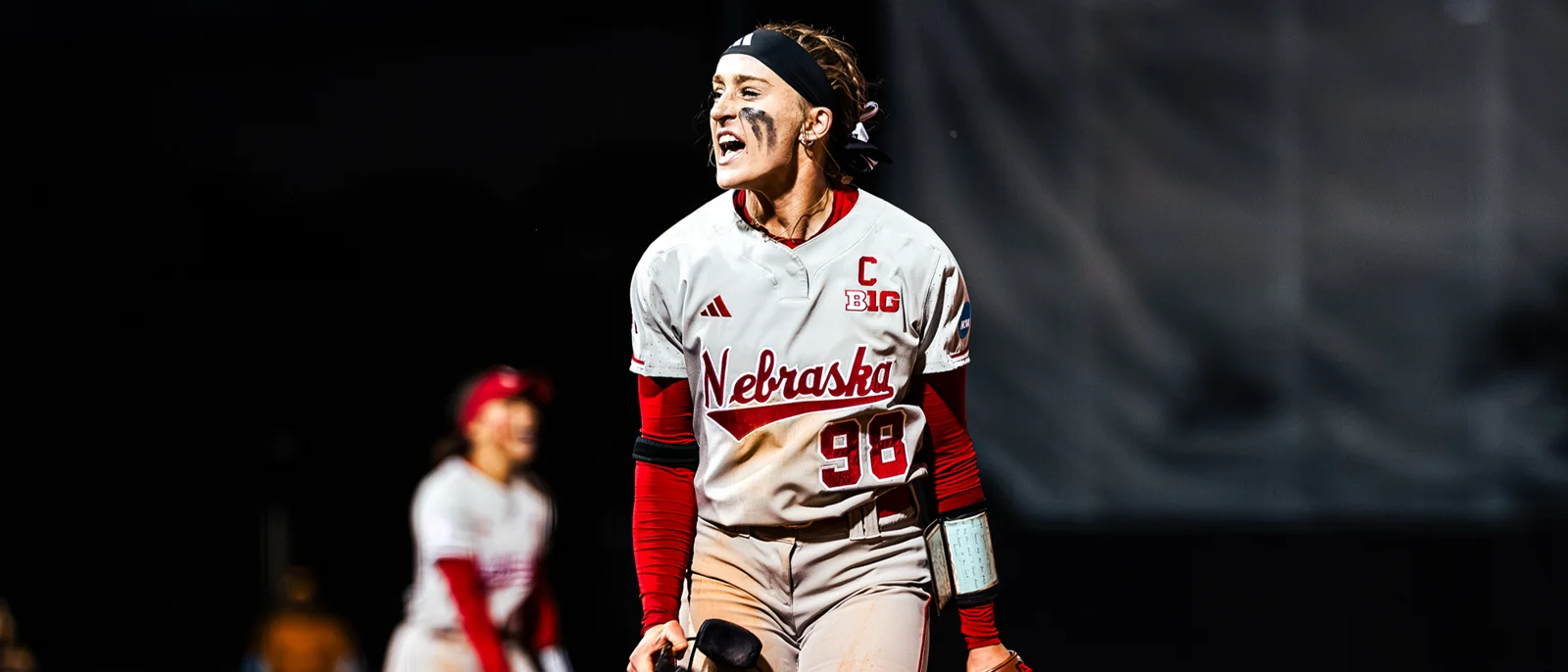
The NCAA softball DP/FLEX rule lets a team separate one offensive assignment from a defensive assignment while keeping nine places in the batting order. Ten players can be active in that arrangement. There is never a tenth batter merely because the lineup card has a FLEX listed beneath the batting order.
The key is to follow the batting position and defensive job separately. The fictional lineup below makes those changes visible, including when a player actually leaves the game and when she simply changes duties. The explanations use the NCAA's 2026–27 framework, checked with its October 2, 2026 corrections.
Start with nine batting positions and a separate FLEX
The designated player, or DP, initially occupies a batting position without a defensive assignment. The FLEX initially supplies defense and is identified in the tenth position on the card. The two must be different players when the arrangement is presented at the pregame meeting. The FLEX can play any defensive position; she is not automatically the pitcher.
Those starting designations matter because the arrangement comes from the submitted lineup, rather than a coach deciding midway through a nine-player game to invent an extra hitter. NCAA Rule 8.2, available through the official softball rules page, provides the framework. High-school DP/FLEX charts can look familiar, but the NCAA text controls these college examples.
Read the lineup card before following a substitution
Here is an invented starting card, not the lineup from a real college game. Reed is our DP, Ortiz is our FLEX and Chen will matter when we consider a defensive change. All the names refer only to this teaching example.
| Card position | Player | Initial job |
|---|---|---|
| 1 | Hart | Catcher |
| 2 | Chen | Second base |
| 3 | Lane | Shortstop |
| 4 | Miles | First base |
| 5 | Reed | DP: bats fifth |
| 6 | Brooks | Left field |
| 7 | Wells | Center field |
| 8 | King | Third base |
| 9 | Cole | Right field |
| 10 | Ortiz | FLEX: pitcher, no separate batting turn |
After Cole bats ninth, the order returns to Hart. Ortiz does not follow Cole as a tenth hitter. Meanwhile, Ortiz joins the other eight defenders on the field. Reed's hitting assignment and Ortiz's pitching assignment coexist without the team putting ten defenders in play.
Do not confuse the card's position with the number on a jersey or a defensive scoring number. The fifth batting position remains fifth even if Reed wears number 22 or later plays second base. This distinction becomes particularly useful when a broadcast graphic shows only the nine hitters: Ortiz can be legally participating without appearing in that graphic's batting list.
For the broader comparison with the designated hitter in baseball, see our softball versus baseball guide. For tracking this softball game, keep the card above as the baseline. Each subsequent example identifies what changes from that baseline so that one scenario's substitutions do not silently carry into another.
When the DP plays defense, check whom she replaces
Reed taking a glove does not supply enough information to determine who has left the game. First identify the defender she replaces. The NCAA's 2026–27 casebook distinguishes the DP leaving the batting order from the FLEX leaving defense. Apply that distinction to two separate changes from our original card.
Replacing the FLEX reduces the active lineup to nine
Example A: The coach reports Reed taking over in the circle for Ortiz. Reed now bats fifth and pitches. Ortiz, the starting FLEX, is withdrawn from defense. The team has nine active players: the original nine hitters, who now also supply the nine defensive assignments.
Reed has added a job without surrendering her original offensive job. She has not left the batting order, so this is not an exit charged against her re-entry allowance. Ortiz has left the assignment that kept her active, so Ortiz has been charged with a substitution. The apparently simple phrase "Reed replaces Ortiz" therefore has different consequences for the two players.
Write the immediate state on the card: Reed, fifth and pitching; Ortiz, withdrawn; nine active. Do not move Reed into a new batting position because she has become the pitcher. Do not leave Ortiz on the list of active defenders while adding Reed to it. The next decision about restoring Ortiz requires the return accounting addressed below.
Replacing another defender keeps the FLEX in the game
Example B resets to the original starting card. Instead of pitching, Reed takes second base for Chen. Ortiz continues pitching. Chen keeps batting second but no longer plays defense. Chen is now the offense player, or OP, while Reed continues to bat fifth as the DP.
This leaves ten active players. Count their jobs: Reed has one of the nine defensive assignments; Ortiz still has another; Chen remains one of the nine hitters. Chen sitting in the dugout during the defensive half does not mean she has been removed from the game. In this example neither Reed's added defense nor Chen's move to offense only removes a hitter from the batting order.
Both Reed and Ortiz can therefore be on defense together. The restriction is not "only one may wear a glove." The distinctions are their offensive assignments and which player, if any, has been withdrawn. Report these movements to the plate umpire; a legal arrangement still needs to be communicated correctly. Watching who walks onto the field without checking the reported assignments can produce the wrong conclusion about availability later.
The FLEX can bat or run only in the DP's position
Reset to the original card for Example C. Reed bats fifth, singles and reaches first base. The coach reports Ortiz running for Reed. Ortiz now occupies Reed's offensive position as well as continuing her defensive assignment. Reed has been withdrawn from the batting order, and the number of active players falls from ten to nine.
Running is offense for this purpose. Ortiz does not become a free extra runner who can simply step aside without any consequence for Reed's availability. On the next defensive half, Ortiz can continue pitching. Her added offensive work has not removed her from defense, so Ortiz has not been charged with a substitution merely for taking Reed's offensive place.
The batting position remains fifth. Ortiz cannot run for Chen in the second position instead, even if Chen is a slower runner or Reed has already scored. Nor can the coach place Ortiz in another hitter's position because that player has the next turn due. The restriction follows the DP's designated place on the original card, rather than the team's preferred offensive matchup at that moment.
There is another important condition: the FLEX cannot play offense only. If Ortiz is both pitching and batting fifth, the combined assignment is coherent. A later change that removes her defensive role needs to be accounted for under the substitution rules; it cannot leave an offense-only FLEX hidden in the lineup. Equally, the DP cannot remain active only on defense after losing her offensive assignment.
The fifth-position DP option does not disappear permanently when Ortiz takes it. An eligible player can fill that DP position again, returning the arrangement to ten active players and Ortiz to defense only. The casebook's A.R. 8-6 confirms that an eligible substitute can enter the DP position directly; the coach need not first bring back the starting DP merely to remove her immediately.
For example, the coach might later introduce a previously unused hitter, Vega, as the DP batting fifth. Reed's individual availability is a separate question; Vega filling the DP role does not make Vega the starting player or reset Reed's return allowance. Ortiz can keep pitching while Vega hits fifth. The practical check is always the same: identify the offensive occupant of the fifth position, identify the FLEX's defensive assignment, and then determine which individual actually exited.
A coach can choose a combined assignment to use a player's hitting or speed. That tactical advantage comes with the consequences for the player who leaves. It does not create two simultaneous offensive occupants of one batting position.
Track re-entry separately from a change of defensive position
Under the NCAA's ordinary re-entry rule, a starter may leave and return once, maintaining her original batting position whenever in the order. A withdrawn substitute cannot return. Rule 8.2 applies those individual limits to the starting DP and FLEX. The ability to move between nine and ten active players does not give one athlete unlimited exits and returns.
Follow a starter's exit and return on a simple ledger
This ledger starts again from the original card. Reed is the starting DP batting fifth and Ortiz is the starting FLEX pitching. Assume all movements are properly reported and no medical replacement exception is involved.
| Step | Reported change | Active players | Reed's ordinary availability |
|---|---|---|---|
| Start | Reed hits fifth; Ortiz pitches | 10 | Has not exited |
| 1 | Ortiz runs for Reed and keeps pitching | 9 | Withdrawn; one return available |
| 2 | Reed returns as DP fifth; Ortiz plays defense only | 10 | One return used |
| 3 | Ortiz again runs for Reed and keeps pitching | 9 | Withdrawn again; cannot return ordinarily |
| 4 | Unused substitute Vega enters as DP fifth | 10 | Still unavailable |
The team's DP option survives step three; Reed's personal return allowance does not. Step four uses an eligible new player in the existing fifth position. It does not restore Reed's eligibility to return merely because the card once again has ten active players.
Ortiz has a different ledger. Throughout these steps she has continued playing defense. Adding offense and returning to defense only have not withdrawn her from the game. She has not spent a re-entry in this sequence. That is why counting every announcement as "one substitution for everybody involved" produces the wrong answer.
Compare Example A from the defensive section instead, starting from its own original-card reset. When Reed pitches for Ortiz, Ortiz actually exits. If Ortiz then legally returns to the FLEX defensive assignment, that uses Ortiz's one ordinary return. Removing Ortiz from defense again would leave her without another ordinary return. Reed retaining fifth throughout does not suffer that same exit merely for adding or shedding the defensive job.
A substitute does not inherit a fresh starter's return
Continue the ledger after step four. The coach reports another previously unused player, Stone, replacing Vega as DP batting fifth. Vega is now a withdrawn substitute and cannot return under the ordinary rule. Stone is a substitute occupying the DP role, not a new starter with a newly created starter's return allowance.
At that point, fifth belongs to Stone on offense; Ortiz remains the defensive FLEX; ten players are active. Reed is unavailable after her second withdrawal, and Vega is unavailable after being withdrawn as a substitute. Another eligible unused substitute might later fill the role, but neither the role's continued existence nor the supply of other substitutes refreshes those two individuals' availability.
Keep ordinary tactical changes separate from Rule 8.6.2's medical replacement procedures. The October 2 corrections explicitly include the specified medical-condition exception alongside concussion provisions. Those procedures involve medical evaluation and clearance; they are not an extra return a coach can claim for an ordinary pinch-running decision. Our ledger deliberately excludes them so the routine substitution accounting stays clear.
Follow a pitcher who hits without inventing a tenth batter
A pitcher can hit in college softball. The useful question is how she is identified on this game's card and which assignments change when another pitcher enters. "The pitcher is batting" does not, on its own, reveal whether she is the DP, a FLEX playing both ways, or an ordinary player in a nine-player starting lineup.
Example D resets to our original ten-player card. Reed begins as DP fifth and Ortiz as the defensive FLEX pitching. The coach reports Reed taking over in the circle for Ortiz, producing Example A's nine-player state: Reed hits fifth and pitches; Ortiz is withdrawn. Suppose the next pitching change introduces a previously unused substitute, Taylor, as the FLEX pitcher.
Rule 8.2.9.3 permits a substitute FLEX to enter the tenth position directly when that option is inactive. The coach does not have to re-enter Ortiz first. Taylor now pitches as FLEX, Reed stays DP batting fifth, and the arrangement returns to ten active players. Reed's bat remains in the order while Taylor supplies the pitching. Ortiz has not used her return merely because somebody else filled the FLEX assignment.
The card therefore answers an otherwise confusing broadcast question: why did the relief pitcher not take the previous pitcher's batting place? Here Taylor replaced the FLEX role, while Reed retained the DP's fifth position. Neither player gained a new batting position and there is still no tenth batting turn. The reported change explains the outcome more reliably than identifying both players simply as pitchers.
Contrast a separate nine-player starting lineup in which a fictional pitcher, Hale, bats fifth. If substitute Gray replaces Hale completely, Gray takes that fifth position as well as the pitching assignment. Hale's possible ordinary return is governed by the starter's rules. The coach cannot newly create a DP to keep Hale hitting merely because the team would prefer to retain her bat after that substitution.
For a live game, check four things in order: the original DP/FLEX designations, the current batting position, the defensive job and the individual's exit-and-return history. Warm-up pitch permissions under Rule 10.19 are another question; receiving warm-up pitches is not what creates a starter's re-entry right.
Finally, confirm the competition format. These examples explain the ordinary NCAA framework. Separately agreed nonchampionship fall formats can involve permitted variations, so an exhibition's freely changing lineup should not be used as proof of what is legal in a spring championship-selection game. With the correct code and the reported card in hand, the seemingly complicated movement becomes a sequence of specific assignments that can be checked one at a time.
Join the conversation
Share a question or a thought about college softball. Comments are reviewed before they appear. Keep it friendly and on topic.
No comments yet. Start the conversation.
Sign in with Google to leave a comment. Your email address is not displayed.