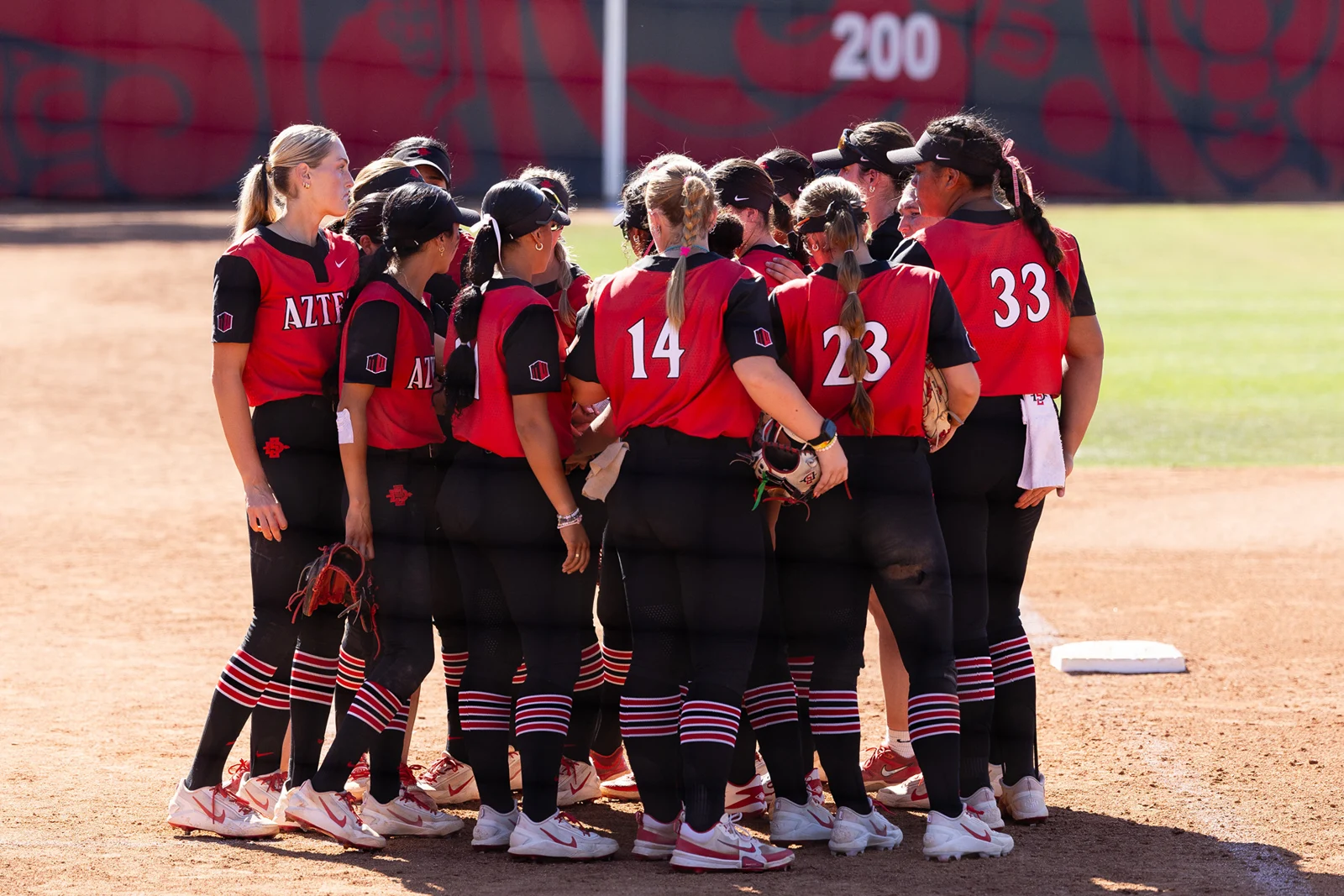
The 2027 Pac-12 softball schedule gives fans a concrete spring calendar: conference series begin March 25–27, the final league weekend runs May 6–8, and the championship follows May 12–15 in San Marcos, Texas. The interesting part is how differently teams travel through that calendar. San Diego State starts a week before Boise State and finishes its conference series a week earlier, while Texas State has both a regular-season home slate and the tournament hosting assignment.
With the October 8 announcements now available, the best way to read the new schedule is through its series, home and away stretches, and open conference weekends. This guide examines those paths using official school releases available on October 15, 2026.
How the announced conference schedule is organized
Each program has six three-game conference series: three at home and three away, for 18 scheduled league games. That structure matches the seven-school softball membership, because each team faces six opponents. It creates a direct comparison across the league without requiring fans to untangle a long list of opponents that one contender plays and another avoids.
There is still a difference between an equal number of series and an identical route. Boise State’s official announcement starts its conference calendar April 2–4 and ends it May 6–8. San Diego State’s begins March 25–27 and ends April 30–May 2. A team can therefore be ahead in conference games played without having gained an extra opportunity in the full-season format. During April, a bare win total will need that context.
The opening and closing date ranges also deserve attention. March 25–27 and May 6–8 run Thursday through Saturday in 2027. Much of the intervening schedule follows Friday through Sunday. Someone planning around a familiar Friday opener should check the actual published window before arranging work or travel.
This release establishes the league portion of the season. It does not complete every school’s February tournaments, midweek games, game times, or viewing information. Both Boise State and San Diego State said their nonconference schedules would follow. An empty conference weekend on one of these calendars therefore means no announced Pac-12 series in that window; it does not establish that the team has no games at all.
Use the Pac-12 softball schedule page to follow the conference as individual fixtures and viewing details are updated, and the linked school announcements to understand the original series layout. Keeping those two jobs separate makes the new release useful immediately while leaving room for the additional details that turn a date range into a complete game-day plan.
Opening weekend and the early series to watch
The first conference weekend has three series, with Boise State waiting until the following week to enter league play. The opening matchups put the new conference’s geographic range on display immediately: Texas State heads to Utah, Oregon State visits San Diego, and Colorado State travels to Fresno.
| Dates | Visiting team | Host |
|---|---|---|
| March 25–27, 2027 | Oregon State | San Diego State |
| March 25–27, 2027 | Colorado State | Fresno State |
| March 25–27, 2027 | Texas State | Utah State |
Utah State’s announcement identifies its Texas State series as the programs’ first meeting since 2020. That gives the opener a useful scouting question: how quickly can each staff adjust across three games against an opponent it has not seen recently? The answer will come from the weekend’s pitching decisions, lineup changes, and results. The old head-to-head record offers little basis for declaring who should win in 2027.
Oregon State at San Diego State provides a different starting point. The teams met twice in San Diego in 2026, with the Aztecs winning both games. Their next meeting becomes a conference series, with a third game available to test whether an early result carries through the weekend. The change in competitive context is more interesting than treating those two previous scores as a prediction.
For Fresno State, the opening home series against Colorado State leads directly into an April 2–4 trip to Oregon State. Its published series list then has no conference matchup April 9–11. That sequence gives fans a clear first checkpoint: six scheduled league games across two venues before the Bulldogs’ next conference home series. Whether that gap contains other games will depend on the full schedule.
Boise State’s first test is San Diego State at home April 2–4, followed by trips to Utah State and Oregon State on consecutive weekends. Its initial home opportunity therefore comes before a run of six scheduled road games. A strong first weekend would be valuable, but the road response will give a fuller picture of the Broncos’ start.
Watch the individual games as well as the series winner. A hypothetical 2–1 weekend and a 3–0 weekend both count as winning a series, but they produce different records. In an 18-game league calendar, that extra game can remain visible well after the opening-weekend excitement has faded.
How the published paths differ for San Diego State and Texas State
San Diego State and Texas State make a useful comparison because they meet in late April but reach that series through different calendar patterns. Each has nine scheduled home conference games and nine away. The difference lies in when those opportunities arrive and what remains afterward.
San Diego State’s sequence of home and road series
The Aztecs’ six-series calendar runs through six consecutive weekends. After opening against Oregon State at SDSU Softball Stadium, they visit Boise State April 2–4 and Colorado State April 9–11. Utah State comes to San Diego April 16–18, the Aztecs visit Texas State April 23–25, and Fresno State comes to town April 30–May 2.
That puts three of the four middle series away from home. The Boise and Fort Collins weekends are consecutive road assignments, but the release does not establish whether the team will remain away between them. For fans following the competitive story, the meaningful point is simpler: SDSU must build a conference record across several road environments before it reaches its last home series.
The Utah State home weekend breaks up that road-heavy middle. It will be a useful place to compare how the Aztecs play after the first two road series: whether their pitching roles remain stable, whether the lineup changes across games, and whether they can turn a home opportunity into more than a narrow series win. Those are questions for April’s games, rather than conclusions available from October’s calendar.
The April 30–May 2 Fresno State series is especially useful for local fans because it is the last announced chance to see SDSU in regular-season conference play. After that, the Aztecs’ league record will be complete while several opponents still have May 6–8 series remaining. SDSU supporters may spend the last conference weekend watching other results affect the table. The schedule does not yet tell us whether those results will decide a championship, qualification, or simply final positioning.
That earlier finish also leaves a longer interval between SDSU’s final conference game and the tournament’s May 12 opening than Texas State will have. It should not be described as guaranteed rest: additional games and the eventual pitching workload still matter.
Texas State’s route back to San Marcos
Texas State’s announced route starts at Utah State March 25–27, then has an open conference weekend April 2–4. Oregon State visits San Marcos April 9–11. From there, the Bobcats alternate away and home: Fresno State away April 16–18, San Diego State home April 23–25, Boise State away April 30–May 2, and Colorado State home May 6–8.
The resulting five-week run to the finish offers no additional open conference weekend. Texas State will move between a home series and a road series each week, with trips to California and Idaho separated by the SDSU home matchup. That is a different rhythm from the Aztecs’ two consecutive road weekends, even though both schedules contain the same number of away series.
Texas State’s release also identifies the Oregon State and San Diego State series as those programs’ first visits to San Marcos. The novelty has a practical side for spectators: these are identifiable home weekends to choose from, rather than a general promise that new opponents will eventually appear. For the Bobcats, each offers a chance to establish a home advantage against a conference visitor without a previous series at this site.
The Colorado State finale brings Texas State home before the tournament hosting week. A fan considering both events can distinguish a scheduled regular-season matchup from a championship whose participants and game assignments still need to be settled. Hosting supplies the venue; it should not be treated as proof of Texas State’s eventual seed or an already scheduled Bobcats tournament game.
Why the six-team championship field matters
The Pac-12’s official championship calendar places softball at Texas State May 12–15 with six participants. Oregon State’s October schedule announcement makes the implication explicit: six of the conference’s seven softball teams will qualify. One team will therefore finish outside the tournament field.
That creates two races worth following. Teams at the top will compete for the regular-season distinction and tournament positioning, while another group may be trying to secure a place in San Marcos. A matchup involving teams below first place can still have direct postseason significance. Calling such a series meaningless because neither side leads the league would miss the tournament cutoff.
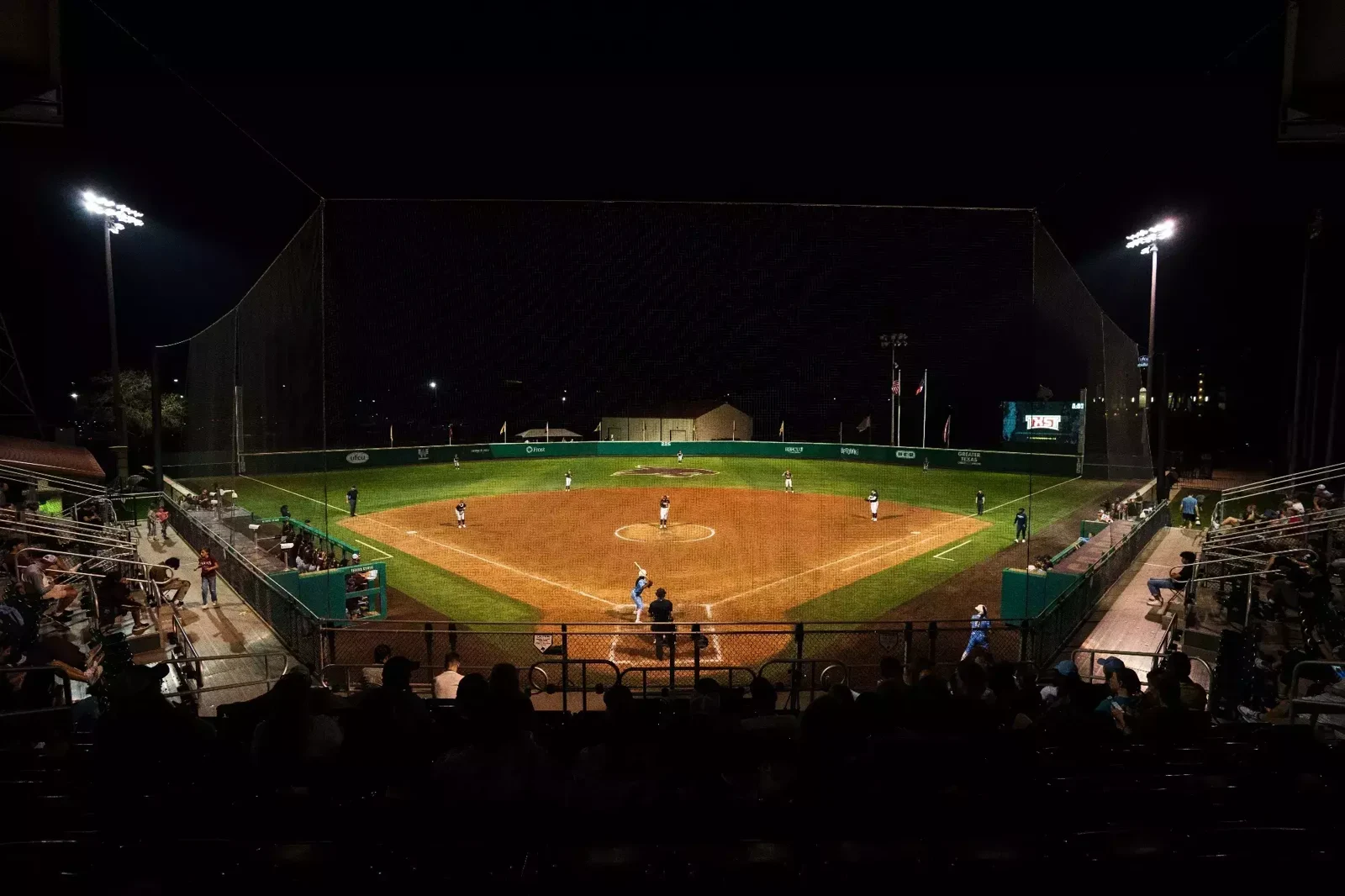
The reward at the tournament is also distinct from the regular-season standings. Boise State’s release states that the tournament winner receives an automatic NCAA tournament bid. Finishing a strong conference season and winning that championship are related goals, but the automatic berth described in the announcement belongs to the championship winner. Fans should keep that distinction in mind when assessing what a late-April result has secured.
The final league weekend has several obvious places to watch: Boise State visits Fresno State, Utah State visits Oregon State, and Colorado State visits Texas State May 6–8. Those series could affect different parts of the table simultaneously. San Diego State will already have completed its announced conference slate, making its position dependent on the record it has built and the remaining results elsewhere.
The releases examined here establish the field size, host, dates, and automatic bid. They do not supply a complete softball bracket, its precise game sequence, or the tiebreakers needed to resolve equal records. A six-team field alone does not establish which seeds receive byes or how many losses eliminate a team. Those details should come from the eventual softball championship information before anyone maps a favorite team’s required route through the tournament.
Planning a Pac-12 softball weekend before times and TV are final
Published date ranges are enough to start choosing a weekend, but the level of detail differs by school. San Diego State’s current 2027 schedule already lists game times, including 6 p.m. PDT for the March 25 and March 26 Oregon State games and noon PDT for March 27. Texas State’s current 2027 schedule lists its conference dates and locations without first-pitch times. Check the individual game listing rather than assuming every announcement is at the same stage.
Build the trip around the host and the published series window
Start with the home school. Oregon State at San Diego State March 25–27 means SDSU Softball Stadium, while San Diego State at Texas State April 23–25 means Bobcat Softball Stadium in San Marcos. The visiting team’s schedule helps identify the matchup, but the host’s current game information is the better place to finish the plan for admission, venue access, and local arrangements.
The San Diego State schedule and Texas State schedule provide convenient team views as spring details are added. Before purchasing admission or committing to travel, compare your chosen date with the official SDSU schedule or official Texas State schedule. Read the time-zone label as well as the hour, especially when following an away series from another state.
Ticket announcements are another separate step. Boise State’s October release says season-ticket renewal information will arrive later and offers an interest form. Oregon State also says ticketing details will follow. A general ticket link in a school’s navigation does not, by itself, establish that your chosen 2027 softball game is on sale. Check the event, season, seating or admission type, and whether the purchase covers one game or a larger package.
For viewing, wait for a softball-specific game assignment or an official watch link. The conference’s broader media announcement describes football and basketball coverage; those network names do not identify the stream for every softball series. A schedule entry that has a date and venue can still be waiting for its broadcast information.
For the championship, begin with May 12–15 in San Marcos and keep the later bracket announcement in the planning process. The date block tells you where the event belongs on the calendar. The bracket and ticket information will establish which session contains a particular game and which admission option fits the visit.
What to follow when the new season begins
The first useful habit is to read a conference record alongside games played. Fresno State has no announced conference series April 9–11, Oregon State has its conference break April 23–25, and Utah State’s comes April 30–May 2. Those staggered gaps will temporarily leave teams with different numbers of opportunities. For illustration, hypothetical records of 6–3 and 4–2 both represent a .667 winning percentage, despite the different win totals. That comparison explains the records; it does not settle an official tiebreaker.
Next, separate the result of a series from how it unfolded. Did a team recover after losing the opener? Did it preserve a lead late in the deciding game? Did the same pitcher handle most of the innings across all three games? Those details can help explain why a record is improving or slipping. A pitching workload is something to observe in the box scores, rather than a reason to assume an injury or predict a player’s availability.
Home and away results will be useful, too. Everyone has the same six opponents, but the site of each series differs. SDSU’s early April road assignments and Texas State’s alternating final five weekends create specific tests to follow as the season develops. An October schedule cannot establish which is harder without knowing how the 2027 teams actually perform.
Finally, revisit the complete schedules once the remaining nonconference games appear. They will show what surrounds each league series and what fills an open Pac-12 weekend. That context will make the spring easier to understand without turning a conference date announcement into a national postseason prediction.
The calendar already provides a clear viewing arc: the three March 25–27 opening series, Boise State’s entry the following week, SDSU’s early finish against Fresno State, the remaining May 6–8 finales, and the six-team championship in San Marcos. The results will determine the contenders. The announced dates tell fans where to start watching that story develop.
Join the conversation
Share a question or a thought about college softball. Comments are reviewed before they appear. Keep it friendly and on topic.
No comments yet. Start the conversation.
Sign in with Google to leave a comment. Your email address is not displayed.