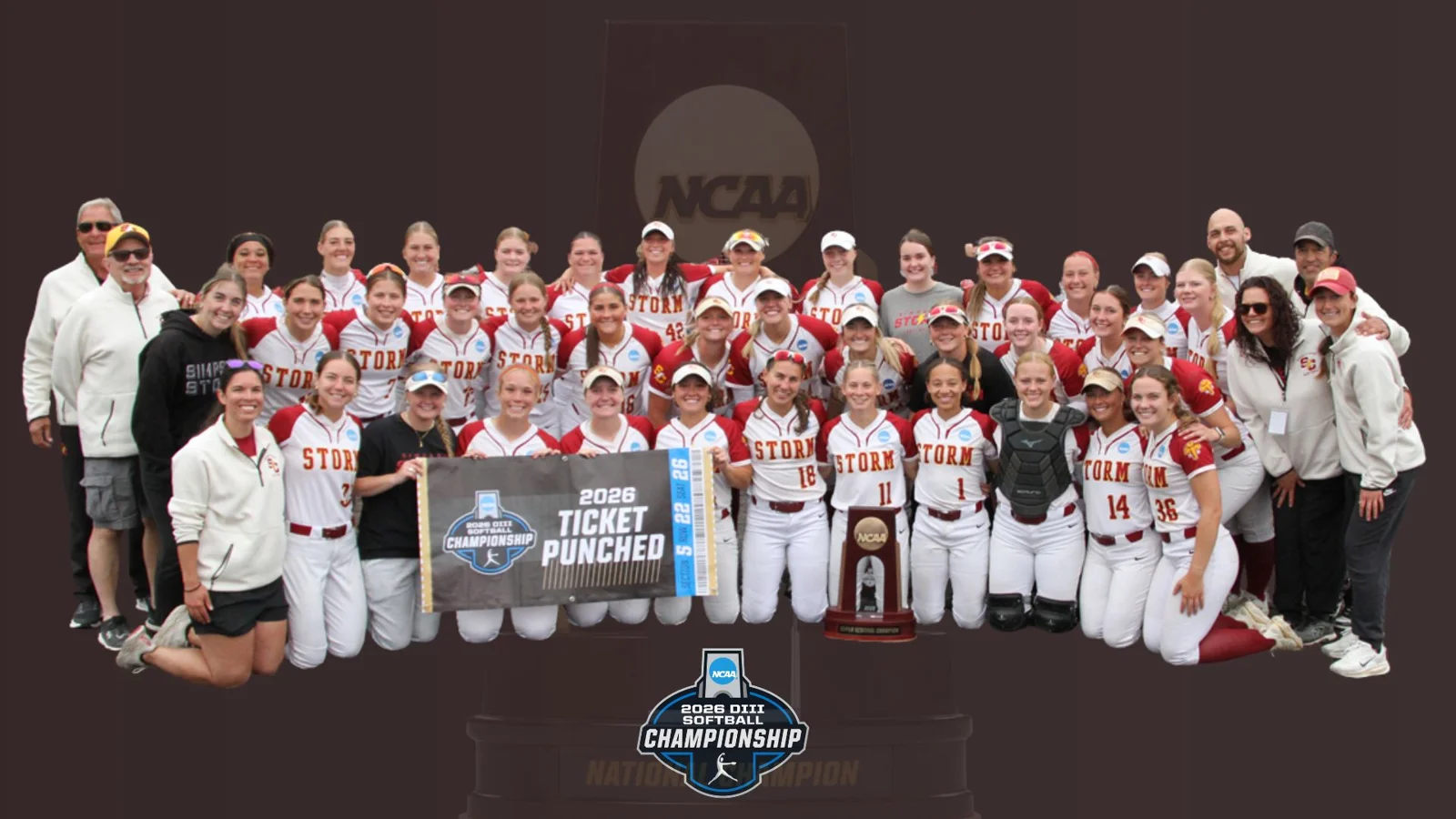
Simpson College softball is the NCAA Division III Storm program in Indianola, Iowa. It competes in the American Rivers Conference and plays at the Simpson Softball Complex. The name can be confused with Simpson University, so check the institution before opening a roster or scoreboard. For Storm fans, the program's 2026 return to the national championship stage adds a compelling recent chapter to a longer softball history.
Meet the Storm in Indianola, Iowa
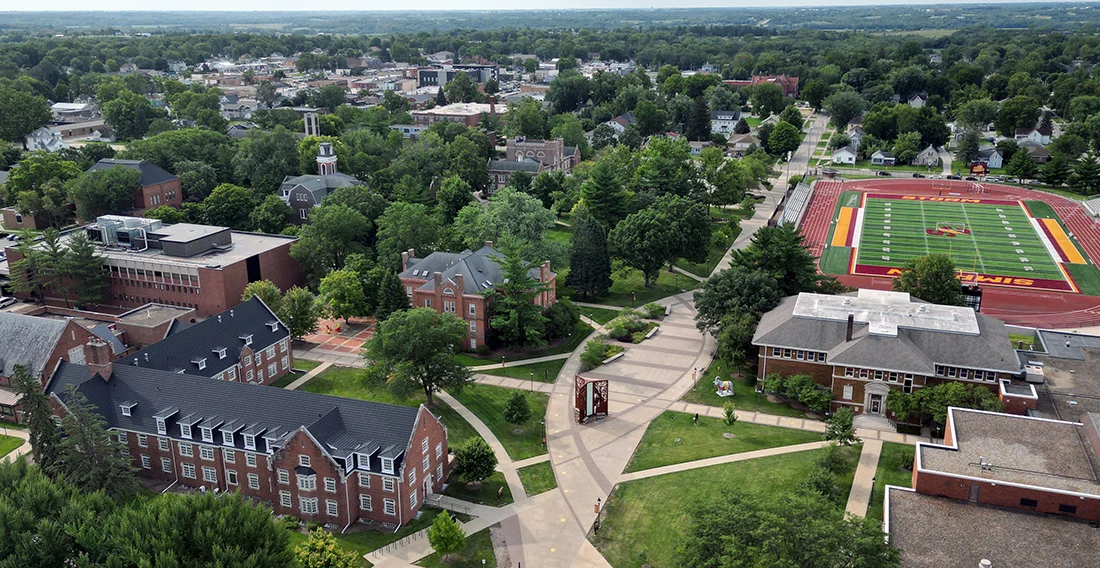
Start with the location: Simpson College's campus is in Indianola, near Des Moines. The school calls its teams the Storm. Its athletics branding connects that nickname with a lightning motif, while the college's familiar red and gold help distinguish it on a compact scoreboard or a crowded athletics results page. Those identity checks are especially useful when a search leaves off the words “College” and “Iowa.”
The American Rivers Conference's Simpson coverage identifies the program's NCAA Division III national competition. The league is commonly shortened to A-R-C. Keep the conference and national championship levels attached when reading a result: a conference win contributes to one race, while a regional or national tournament game belongs to another stage of the season.
The softball venue is the Simpson Softball Complex. The college's 2022 athletics announcement discusses it separately from McBride Baseball Field and Buxton Stadium. That distinction matters when finding directions. A general athletics address or a campus landmark is a starting point; the facility named on the specific softball listing is the destination to confirm before you arrive.
Simpson College and Simpson University are different programs
Simpson University athletics belongs to the Red Hawks, a separate institution from the Iowa Storm. A result, coach biography or recruiting page from that site should not be used to describe Simpson College. The safest combination is the full school name, mascot and official domain. For the Iowa team, begin at SimpsonAthletics.com softball, rather than selecting the first page whose title says only “Simpson.”
The confusion also affects historical searches. A tournament headline can omit the state because its original readers already know the local team. When that headline appears in a national search, the missing context becomes important. Check the dateline, opponent and organizing body before adding the result to a team timeline. A story about a different Simpson does not become relevant merely because both schools play fastpitch softball.
Once the institution is clear, use three different pages for three different questions. The schedule tells you when and where games are listed. The roster identifies players for a particular season. The statistics describe appearances and results over a stated sample. A news story helps explain what happened, but its publication date fixes its context. Keeping those functions separate makes following the Storm easier and prevents an old preview from becoming an accidental claim about today's lineup.
This guide uses the completed 2026 season for recent context and official portals for the next update. It does not treat a search-engine label as proof that a new spring schedule is complete. If you are returning after a long gap, identify the current roster year and the exact game date first; then use the history below to understand why the program's latest national appearance attracted attention.
Why Simpson's 2026 national run matters
The 2026 Storm brought Simpson back to the eight-team Division III finals for the first time since 1999. That is the central significance of the run: the program returned to a stage associated with its championship era. It is a more precise description than saying Simpson merely “made the tournament,” because earning a national tournament place and advancing through the opening rounds represent different accomplishments.
Put the championship history in its own Division III context
The NCAA's Division III championship history lists Simpson as the 1997 and 1999 national champion under Henry Christowski. The 1997 team finished 39-7 and beat Montclair State 2-1 in the title game. The 1999 team finished 47-4-1 and defeated Chapman 6-0. These are Division III titles, with their own opponents and championship history.
Those seasons provide a reference point, rather than a requirement that a later team must match every result. A new group competes under its own schedule and circumstances. For an alumnus, the familiar school name returning to the finals can reconnect generations of players. For a new fan, the earlier titles explain why a late-May berth carried meaning beyond the immediate series win. Neither interpretation requires pretending the rosters or tournament conditions were identical across decades.
Be careful with the phrase “World Series” when planning a trip or finding a replay. Simpson's 2026 national finals were in Salem, Virginia. A general search can lead instead to Division I coverage in Oklahoma City. Add “Division III,” the season and the opponent when looking for Storm postseason video. The organizing division is a practical search aid as well as an important part of the team's record.
Follow the route through regionals and super regionals
The conference's pre-finals account describes Simpson winning the Indianola Regional, including comeback victories over Saint Benedict, then sweeping Saint Mary's 8-3 and 8-5 at the Winona Super Regional. Advancing required handling different settings: protecting a home opportunity first, then winning the next stage away from Indianola.
The finals sequence in the A-R-C results archive shows a 4-3 opening win over Mount Union on May 28, a 9-1 loss to Trine on May 29, a 7-6 victory over Linfield on May 30 and a 6-3 loss to Redlands on May 31. The season's national run therefore included both the excitement of advancing and the challenge of recovering after a defeat.
Trine's account of its win identifies Simpson as the third seed. A seed organizes a championship field; it is not a guarantee that the stronger seed will win each game. The Storm's next-day response against Linfield is useful context when considering the run as a whole. Reading only the largest defeat would miss the victories that brought the team to that point.
For a fan studying postseason softball, this sequence raises concrete questions. How does a lineup keep producing against unfamiliar pitching? How does the staff distribute innings when the next opponent changes quickly? Which baserunners become scoring chances in a close game? Use the relevant box scores to answer those questions, rather than turning the final score into a broad judgment about the entire team. The historical value of Simpson's run is already clear without predicting an automatic return in a later year.
Use the roster and statistics to understand the team
Read the roster as a season-specific reference, then read the lineup as a game-specific decision. A player listed at several positions can serve different needs over a weekend. A pitcher listed on the roster is not necessarily that afternoon's starter. Returning-player stories can provide useful context, but they should not replace the current team list or establish that a previous year's jersey number remains unchanged.
For a manageable introduction, identify the starting pitcher, catcher and first few hitters in the official game lineup. Then watch how those roles interact: the pitcher sets up counts, the catcher manages the ball and running game, and the top of the order tries to create scoring opportunities. Add more names as you follow the series. You do not need to memorize an entire roster before understanding why a pitching change or a pinch runner matters.
The May 31, 2026 box score against Redlands offers a useful worked example. Simpson collected seven hits and scored three runs. Katie Shaner supplied a double, a home run and two RBI. Looking at the extra-base hits adds information that the team hit total alone cannot supply, while the scoring summary explains when the production arrived.
The same game also shows why a pitching decision needs context. Emma LaFave worked 1.2 innings and Marina Cronin worked 4.1. Those figures mean one inning plus two outs and four innings plus one out, respectively; the decimals are not tenths. Together they account for six defensive innings, because the winning home side did not need to bat in the bottom of the seventh. Treating 1.2 as an ordinary decimal would distort any calculation based on that line.
Cronin's relief line records one run and no earned runs. That distinction describes how the run was scored under the statistical rules, rather than erasing it from the scoreboard. A team can receive effective relief after an early deficit and still lose. Read innings, hits, walks and earned runs together before judging the pitching from the final margin. The losing pitcher label by itself cannot describe every contribution made in the circle.
For a season comparison, keep the same end date and competition scope. A pre-finals preview stops before the last tournament games. Conference-only statistics exclude games that belong in the overall season line. Before comparing two hitters' averages, examine at-bats and appearances; before comparing pitchers' ERA, examine innings and opposition. A small sample can highlight an interesting performance without establishing the more durable trend you would expect from a full workload.
Separate individual production from the team's chances. A hitter can have an excellent day while the club struggles to string together baserunners. A pitcher can limit walks but still allow damaging contact. Ask a specific question first, then choose the number that addresses it. For example, look at how often an offense reaches base before asking why its run total is low. This approach makes the statistics a way to understand Storm softball, rather than a second scoreboard with more columns.
Find the next game and plan your visit
Begin at the official Storm softball portal and select the schedule for the season you want. The 2026 archive remains useful for completed results, but a historical opponent should not be treated as a future appointment. If the next spring's full grid is not displayed, return to the official release rather than filling gaps from the previous year's calendar.
Before making travel arrangements, establish the exact date, opponent, city and facility. A tournament game can be a neutral-site matchup even when a compact listing says “vs.” A postseason host can be different from the team's usual home. The college's Indianola campus information includes a map, which helps orient a home visit. Use the venue on the game listing to complete the route, especially if a change has been announced.
For admission, rely on the host's current instructions. Determine whether a ticket or pass covers one contest, a doubleheader or a tournament session, and confirm any rules that matter to your party. Accessibility, bags, seating and parking are questions to settle before arriving, rather than details to assume from another sport. Our college softball ticket guide explains the purchase questions to ask without assigning an unverified price to a Storm game.
Home dates, road trips and live coverage
A doubleheader offers two opportunities to watch, but it also requires a flexible afternoon. Keep the games separate in your calendar and check whether the second start is fixed or follows the opener. A first game that runs long can change the practical arrival time for the second. Recheck the schedule and the team's latest notice before leaving; a saved screenshot cannot reflect a later weather or venue change.
The team's softball link hub provides a “Watch the Storm live” route to the Simpson College streaming page. Start there for school-linked coverage, then match the event's opponent and date. A portal is a route to investigate; it does not establish that every future game will be streamed, that every replay remains available or that all access is free.
For a road contest, follow the watch and live-stat links associated with the specific matchup. The host's production may use a different platform, and national tournament coverage can have its own event page. Check the sport as well as the school name when opening a multi-sport calendar. A current Storm football broadcast does not answer a search for softball, even when both appear under the same athletics brand.
If video is unavailable, a live box score can still make the game followable. Track the inning, outs, runners and pitcher, then read the play-by-play for the sequence behind a score change. After a doubleheader, make sure the recap and statistics you share belong to the game you watched. A memorable performance is easier to discuss accurately when the date and opponent stay attached.
This site's daily schedule and score pages can help with included college games, but they should not be assumed to carry a complete Division III Storm feed. Keep the official Simpson portal bookmarked for the program itself. That habit connects the history and statistics in this guide to the next real lineup, first pitch and result, without turning an evergreen article into an unreliable live scoreboard.
Join the conversation
Share a question or a thought about college softball. Comments are reviewed before they appear. Keep it friendly and on topic.
No comments yet. Start the conversation.
Sign in with Google to leave a comment. Your email address is not displayed.