The 2027 Women's College World Series is scheduled for June 3–11 at Devon Park in Oklahoma City, according to the NCAA's event listing. That gives fans a confirmed destination and tournament window. The eight participants, individual matchups and game-by-game broadcast schedule still depend on the 2027 season and subsequent announcements. Understanding the tournament's route is useful now, even before those names fill the bracket.
The confirmed dates and Oklahoma City venue
The NCAA Division I softball championship page identifies June 3–11, 2027, and Devon Park, Oklahoma City. Its listed window is the authoritative starting point for this guide. It is not a promise that every date has a game for a particular team or that every scheduled possibility will be required to decide the championship.
The city's WCWS visitor page describes June 3–10/11 and says the full schedule and ticketing information are coming soon. Read that alongside the NCAA's window rather than inventing a final-game appointment from the shorter version. As of October 1, 2026, the information supports planning for the event, while the detailed 2027 schedule remains a separate announcement to check.
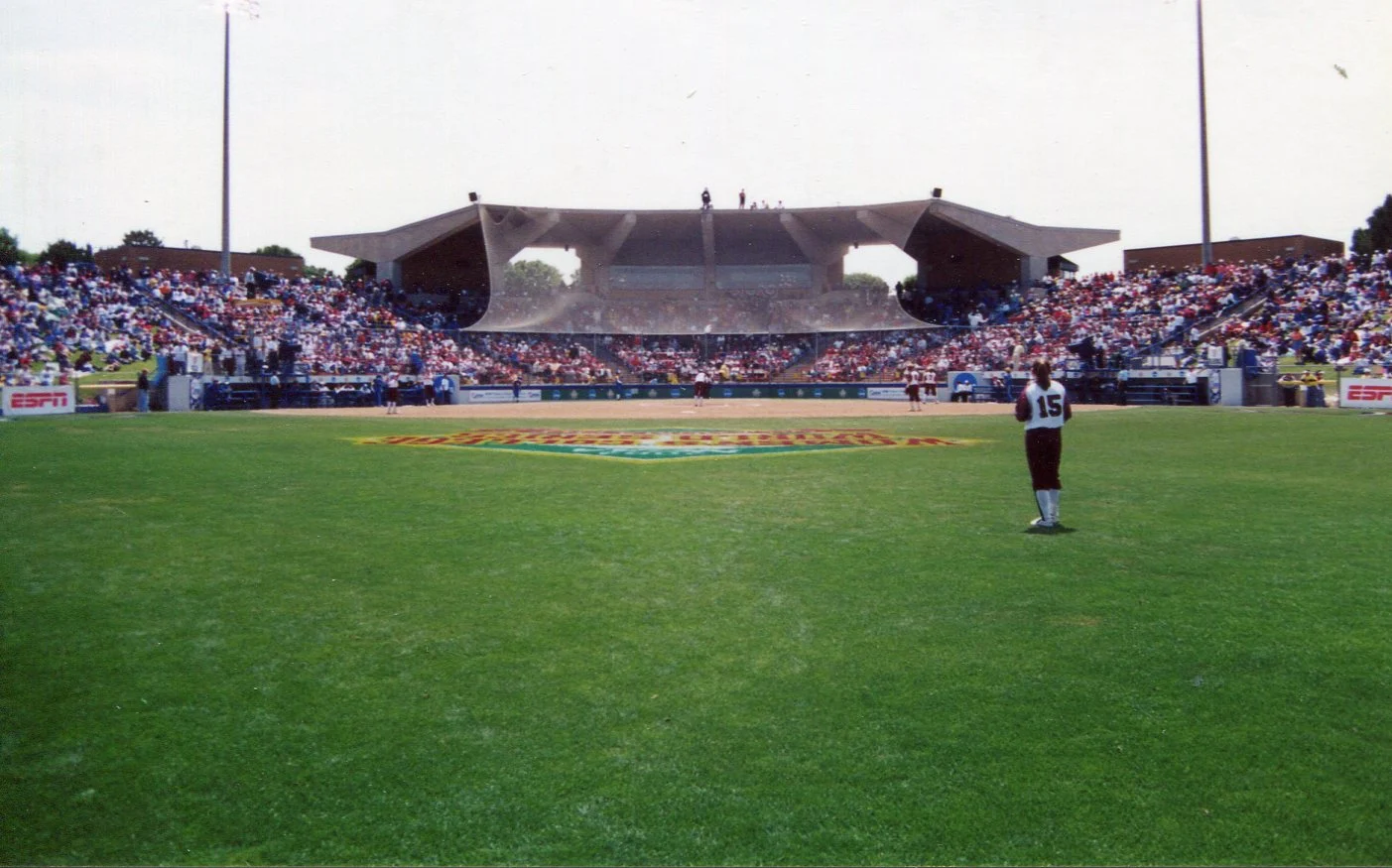
Devon Park is the current name of the former USA Softball Hall of Fame Complex. USA Softball's venue description dates the name transition to May 6, 2024. Older WCWS footage and historical accounts may consequently refer to the Hall of Fame venue without describing a different championship destination. Matching the old and current names helps a fan recognize the setting across different eras.
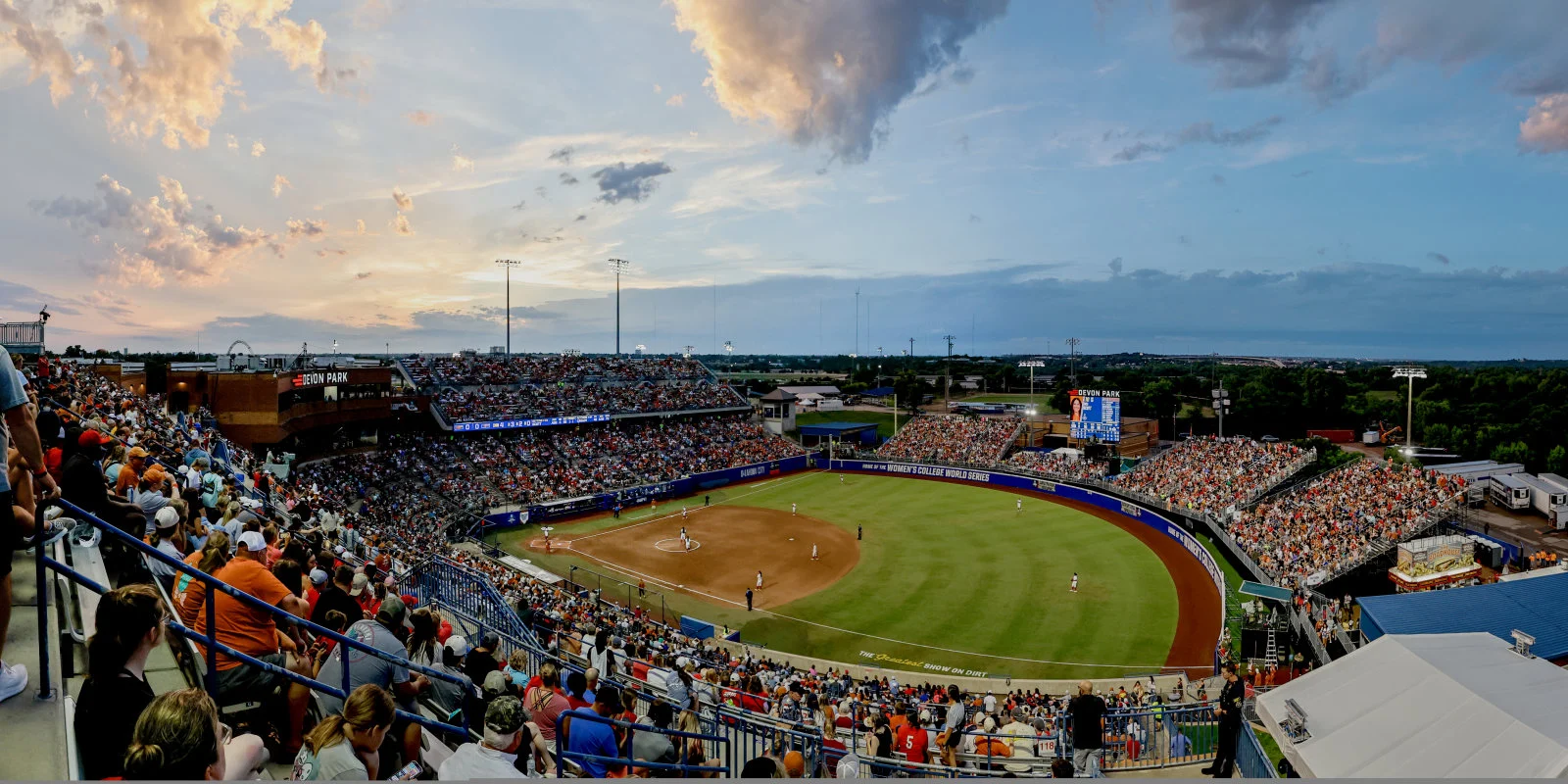
The complex has been located in Oklahoma City's Adventure District since 1987 and contains four fields. The principal stadium field is OGE Energy Field at Devon Park. USA Softball also identifies an upper-deck expansion adding 4,000 seats. These details explain the venue's development without treating an expansion number as the total stadium capacity or confusing a complex containing several fields with a championship played everywhere at once.
For a spectator, a common championship venue changes the viewing experience. Instead of following one campus series at a time, fans can see different surviving teams in the same setting. That makes the bracket itself a central part of the visit: the importance of a game depends on the teams' routes and the consequences of its result, rather than only on the school names printed on the ticket.
The venue address is 2801 NE 50th Street. Visit Oklahoma City places Devon Park about six miles from downtown. A downtown hotel and a stadium seat therefore should not be treated as the same location when arranging the day. The useful early decision is whether the trip centers on a selected portion of the tournament or allows time to follow a team's changing route. The final game assignments will refine that plan once they are announced.
How eight teams earn their place at the WCWS
The World Series is the final stage of the Division I championship, rather than the entire NCAA tournament. The 2025–26 NCAA prechampionship manual, currently linked from the championship hub, describes a 64-team field reduced through regionals and super regionals to eight WCWS qualifiers. This is the latest linked format baseline used here; the 2027 manual and bracket should be checked when released. Its 2026 calendar dates are not the 2027 schedule.
That distinction matters when judging whether a highly ranked team is already an Oklahoma City participant. A poll position, seed or campus hosting assignment can improve the context of its route without completing the route. The World Series field is earned through the preliminary rounds. A fan should follow those actual results before treating a likely contender as a confirmed qualifier.
Regionals reward survival across a four-team bracket
The baseline regional round has sixteen four-team sites using double elimination. A team is eliminated by its second loss, and one winner advances from each site. Consider an illustrative four-team bracket: a team that wins its opener, the next winners' game and the regional final can advance with three victories and no defeat.
A team losing its opener faces a different assignment. It must survive an elimination game, beat the other remaining one-loss team and then defeat the unbeaten finalist twice. That route requires four consecutive victories after the initial loss. The difference is not just how the bracket is drawn. There are more innings to cover, more opportunities for the offense to be stopped and less room for another poor performance.
These are hypothetical paths explaining the format, not a prediction of a 2027 regional. The useful lesson is to ask how much work a team has already done before the final. If one pitching staff has covered an extra game, its coach may face a different choice even when both finalists have excellent season statistics. The bracket record supplies context that a season ERA alone cannot.
Regional play also requires preparation for more than one opponent. A team may encounter different pitching styles and different offensive threats as results determine the next matchup. Watch how the coach allocates the staff and whether the lineup can adjust without losing its identity. An opening win buys room to maneuver; it does not remove the need to beat the remaining opposition.
The manual gives seeded teams an opportunity to host when they satisfy hosting requirements. That opportunity is a reason seeding attracts attention, but the stadium assignment does not award a regional victory. For fans, distinguish the benefit of familiar surroundings from the result still required on the field.
Super regionals test a team in a best-of-three series
The sixteen regional winners move into eight two-team series. Winning twice advances a team to Oklahoma City. Compared with the regional's changing opponents, the super regional concentrates the contest on repeated adjustments against the same team.
A hitter who struggled in the opener may have learned how the opposing pitcher is attacking the count. A staff that succeeded through one set of locations has to decide whether to repeat the plan or anticipate a response. These are the details to watch in a second game: which pitches create swings, which hitters begin to wait and whether the defense changes its positioning.
A split extends those questions to a deciding game. The coach must balance the best available matchup with the workload already carried by the staff. Two wins over one opponent demand something different from accumulating victories against several regional teams. Reaching the WCWS therefore reflects success under both preliminary-round tests, before the championship's largest stage begins.
How the World Series bracket creates a champion
Eight qualifiers arrive with the same opportunity to win the championship, but their routes soon diverge. The current format separates the double-elimination phase that produces two finalists from the best-of-three championship series. The official 2026 WCWS bracket is a useful completed-season model for understanding those routes while awaiting the 2027 bracket.
Follow the arrows as well as the school names. In that bracket, the losers of the two winners' games cross into the opposite elimination paths: the loser of Game 8 enters Game 9, and the loser of Game 7 enters Game 10. The initial halves are therefore not permanently isolated four-team competitions. A team's next opponent can come from the other side of the printed bracket.
An early loss changes the route and the pitching burden
An unbeaten team can become a finalist with three victories. After an opening defeat, a team needs four straight wins to reach that same destination. In the semifinal matchup, the unbeaten team can advance by winning once; the opponent carrying a loss must beat it twice. This explains why the bracket includes conditional semifinal games rather than guaranteeing every listed game will happen.
The arithmetic gives an early win value beyond the immediate celebration. Fewer games mean fewer innings to cover and fewer occasions when one mistake can end the season. A coach still needs to win the next contest, but the staff has more room to choose when its best pitcher works and when another arm can contribute.
Texas supplied a concrete recovery example in 2026. Its championship account records an opening WCWS defeat followed by a 6–1 tournament finish and the title. Teagan Kavan pitched 33⅓ innings in Oklahoma City, with 30 strikeouts and a 1.47 ERA. That was seven team games, compared with the five-game minimum available to a team qualifying unbeaten and sweeping the finals.
The extra work does not prove that losing improves a team. It shows the level of execution needed to recover. A hitter who produces one decisive swing may change a game's result, while the pitching staff must continue supplying outs across the entire route. When watching a one-loss contender in 2027, track both its scoring opportunities and the innings already carried by its pitchers.
Depth also has a specific meaning here. It can mean a second starter capable of handling a complete assignment, or a reliever who creates a useful change in the middle of an inning. Texas used Citlaly Gutierrez, Hannah Wells and Kavan in its 2026 clincher, including a Gutierrez reentry. Kavan finished with two perfect innings and five strikeouts. That sequence shows how a staff can share the job while still giving its ace the closing responsibility.
The championship series resets the contest
Once two finalists qualify, the championship is decided by the first team to win twice in their series. An earlier WCWS loss does not carry forward as an extra strike against that finalist. Losing the first championship game leaves either team needing two wins; it does not automatically eliminate the finalist that traveled through the elimination bracket.
This changes how to read the final matchup. The previous round established who belongs in it, while the series asks which finalist can solve the same opponent twice. A first-game result is valuable because it puts the winner one victory from the title. It also supplies information about the pitch locations, defensive choices and hitters that may shape the next game.
The series can finish in two games or require a third. Texas completed its 2026 sweep by beating Texas Tech 4–1 on June 4. For 2027, keep that historical result separate from the future calendar: the confirmed June 3–11 event window does not, by itself, assign dates to each championship game. A conditional semifinal and a conditional third final represent different decisions at different stages of the bracket.
Following the 2027 tournament before every detail is announced
The future-dates table in the current NCAA manual lists 2027 regionals for May 21–23 and super regionals for May 27–30, ahead of the June 3–11 WCWS. These published round windows give a useful sequence for following qualification. They do not identify the participating schools, campus hosts or individual game times.
If the objective is to follow one school, begin with its regional results and then its super regional series. The most useful World Series preparation is often watching how the team earns qualification. Did its offense respond after facing the same pitcher twice? Did a second arm handle a difficult inning, or did every critical out fall to one starter? Those observations make the opening WCWS matchup more informative than a seed number alone.
For attendance information, the official NCAA ticket hub offers information and alert sign-ups. Check the specific 2027 offering and session description when released. This guide does not assign a price or guarantee inventory from an event listing. A ticket for a selected session and an opportunity to watch a particular school are separate decisions until that school's route and game assignment are known.
What to check when the bracket and broadcasts are released
Read each game entry in a consistent order: the game number, participating teams or winner/loser placeholders, date, time-zone label and broadcast outlet. This catches several easy mistakes. A game awaiting the loser of an earlier matchup is not a fixed appointment for the favorite in that matchup. An entry marked conditional may disappear if the preceding result makes it unnecessary.
Keep the bracket's time zone visible when adding a game to a personal calendar. The 2026 bracket labels its times Eastern, which illustrates why a stadium's location alone cannot determine how to read a published listing. Use the label on the actual 2027 schedule. Recheck it after any announced adjustment rather than relying on a saved image from before the change.
The site's college softball TV schedule and where-to-watch guide help organize current viewing information. Confirm the outlet and access requirement for the specific game when its listing appears. A network name, a streaming service and a television subscription are different pieces of that decision; the 2027 event window does not settle them or establish a free viewing option.
During the tournament, use the scores page alongside the bracket. The final score tells you who advanced, while the route tells you what the victory changed. Record a pitcher's innings rather than only her decision, and notice whether the offense needed one big inning or created repeated chances. Those details carry into the next opponent and can explain a coaching choice that otherwise looks surprising.
A well-followed WCWS is a connected sequence of contests. The first win changes the available route, an elimination victory keeps a team alive, and a championship-series win brings a different kind of advantage. With the June 2027 destination confirmed, fans can prepare to follow those stakes as the actual field takes shape.
Join the conversation
Share a question or a thought about college softball. Comments are reviewed before they appear. Keep it friendly and on topic.
No comments yet. Start the conversation.
Sign in with Google to leave a comment. Your email address is not displayed.