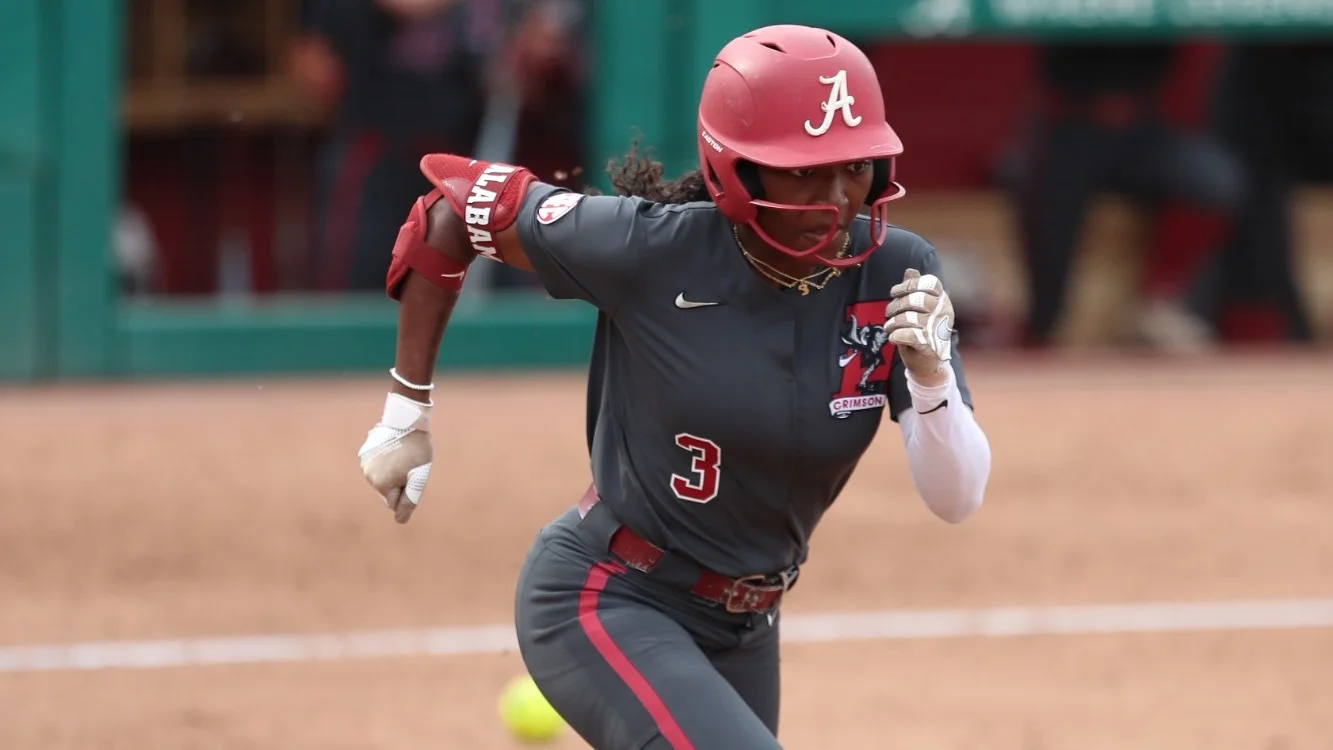
For an ordinary NCAA softball play at first base, the batter-runner uses the contrasting portion in foul territory and the fielder uses the white portion in fair territory. That is the starting point, not the answer to every play. Throws from first-base foul territory, errant throws, hits with no play at first and a runner's return to the base all require a closer look.
When the double first base becomes mandatory
The requirement reaches all three NCAA divisions in the 2027 season. Division I began mandatory use in 2026; Divisions II and III follow in 2027. The NCAA's August 13, 2025 approval announcement describes the corresponding academic years, while its double-first-base rules document states the season dates directly. This is an earlier decision becoming relevant to another group of teams, not a new rule announced in October 2026.
In 2026, Division II and Division III teams could use the double first base by mutual agreement of both coaches. That optional year matters when comparing photographs or old game discussions. Seeing one in a 2026 DIII game does not mean the all-division requirement began early; seeing a single base in a different game does not establish a violation of the 2027 requirement.
The physical arrangement is a 15-by-30-inch unit, either one piece or two, with the white half in fair territory and the contrasting half in foul territory. Orange is a familiar example, but the rule calls for a contrasting color. Throughout this guide, “colored” means that foul-territory portion, regardless of its particular shade.
The official rationale emphasizes room for offense and defense to operate near the same spot, potentially reducing contact and reinforcing the runner's lane. It does not supply a percentage reduction in injuries. The practical benefit for a spectator is a more visible separation of the usual assignments, provided the viewer also recognizes when the play qualifies for an exception.
The ordinary play at first base
Picture a routine grounder fielded inside the foul lines, followed by an ordinary throw to first. There is no wild throw pulling the receiver into foul ground and no other exception changing the approach. On that play, the two portions give the batter-runner and the receiving fielder different targets. Start with that simple situation before trying to interpret an unusual scramble.
The batter-runner's route and first touch
The batter-runner aims for the contrasting portion in foul territory. Under Rule 12.6, touching only the fair portion while a play is being made at first creates a potential appeal. That wording matters: “only the fair portion” is the specified mistake. A claim that any incidental contact with white automatically makes the runner out goes beyond that language.
The additional target also changes the familiar last-stride discussion. When the double first base is used, the rule removes the single-base last-stride allowance for leaving the runner's lane to reach first. A runner cannot simply invoke that allowance to justify cutting across at the end. The route matters as well as the eventual footprint, especially when a throw and a fielder occupy the same space.
The fielder receiving the throw
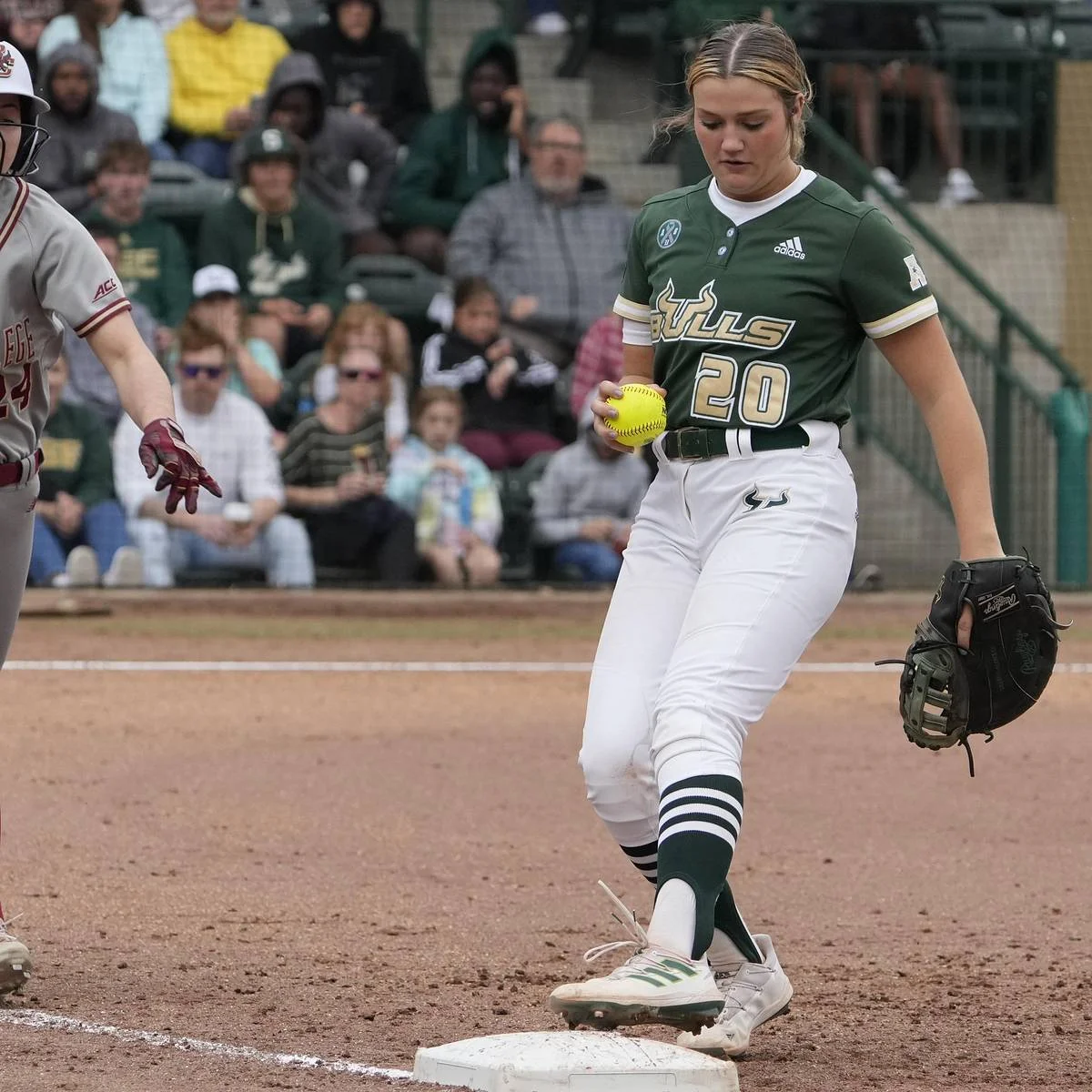
The receiving defender uses the white portion for the ordinary play from within the foul lines or from third-base foul territory. The relevant person is the player making the play, whether that is the first baseman or a teammate covering the position. A defensive substitution does not change the color assignment.
For a normal out at the base, watch possession and contact together. A fielder stretching toward a throw is not enough; the timing of controlled possession, a legal base touch and the runner's arrival has to be considered. A still photograph may identify where players stood without resolving that sequence. That is why a replay debate about the ball reaching the glove is sometimes separate from a debate about which half the fielder touched.
What happens when someone uses the wrong portion
A wrong-color complaint needs more information than a screenshot of a shoe. First identify the kind of play and whether an exception applies. Then identify whose responsibility is in question. A runner's failure to make the required initial touch, a defender's failure to touch the proper portion and a collision can create different rulings.
A runner's mistake and the defense's response
On the ordinary play described above, a batter-runner who touches only white is vulnerable to an appeal. Rule 12.6's effect treats that mistake like missing the base and requires the defense to appeal before the runner returns to touch the fair portion. The initial touch is therefore not an automatic color-based out announced without the required defensive response.
Imagine a hypothetical runner who beats the throw but crosses only the white half, then continues beyond first. The speed of the arrival does not erase the touch problem. The defense still has to act within the rule's appeal condition. If the runner returns and touches white before that appeal, the particular missed-base opportunity described in the rule has passed. This is why the action immediately after a safe signal may matter.
The NCAA's 2026 interpretations add an important replay distinction: video review of which portion the batter-runner touched while running through first is available only after a live-ball appeal. That does not promise replay at every game. Where review is available, asking officials to watch a screen does not replace the appeal that must precede that particular review.
A fielder's mistake does not complete every out
On an ordinary play, a defender touching only the contrasting half has not satisfied the instruction to use the fair portion for the base play. If the runner is otherwise safe, the defense cannot fix that omission merely by pointing to possession of the ball. A tag of the runner is a separate possibility, so it is also wrong to assume that every defender-color mistake guarantees safety regardless of what follows.
Contact adds another issue. In approved ruling 12-10, the NCAA casebook describes an infield grounder, a fielder set entirely on the foul-colored half and a runner properly approaching that half. When contact occurs, the ruling is defensive obstruction and the runner is awarded first. The case supplies specific circumstances; it does not mean every collision anywhere near the extra bag receives the same ruling.
Situations in which the usual color assignment changes
The exceptions respond to how the play develops. They are not favors granted because a runner or fielder prefers another route. Watch where the ball is fielded, where the throw originates, whether a bad throw changes the receiver's position and whether there is a play at first at all.
A play developing from foul territory
When the defense fields or throws from first-base foul territory to make a play on the batter-runner, both players may use either portion. The rule also allows the batter-runner to run in fair territory in that situation. An uncaught third strike retrieved on that side is a familiar example, provided the batter is entitled to advance.
The side of the field is essential. A throw from third-base foul territory does not create the same exception; it belongs to the ordinary defensive white-portion instruction. Nor does every dropped third strike automatically qualify. The throw's actual origin and the conditions of the play have to match. Approved ruling 12-11 in the casebook illustrates the qualifying foul-side play.
Contact requires care here. The rule's note recognizes incidental contact when the fielder moves onto the foul portion so late that the runner cannot avoid it. With ample time, the runner is expected to adjust toward white, although the note specifies no penalty merely for failing to change portions. Intentional interference remains punishable: the exception removes the normal running-lane violation in that situation, not the prohibition on deliberately interfering. Flagrant intentional interference also carries ejection.
An errant throw and the effort to avoid a collision
A second qualifying situation occurs when an errant throw pulls the defender off the fair portion into foul ground. Both players may then use either portion, and the runner may run in fair territory. That flexibility prevents a fixed color instruction from forcing both players toward the same suddenly occupied space.
Imagine a hypothetical throw sailing toward the foul-side edge, with the receiver pulled away from white to catch it. The runner's use of white may be legal under the exception even though it would create an appeal issue on an ordinary play. Now compare a routine stretch toward an accurate throw: merely reaching for a ball does not establish the required foul-ground displacement. The trajectory and resulting position explain the difference; an official scoring decision about an error does not replace those facts.
A hit with no initial play at first
On a ball hit to the outfield with no play being made at first, the batter-runner may touch either portion. A runner rounding first after a deep outfield hit therefore does not have to use the same initial target as a runner beating an ordinary infield throw. The casebook expressly confirms a legal colored-portion touch while rounding on such a hit.
A walk has its own express permission: the advancing batter-runner may touch either white or colored. These cases explain why a blanket “offense always orange” slogan causes trouble. Rule 12.6 distinguishes an ordinary contested arrival from an uncontested advance. The runner's responsibilities after passing the base are a further question.
Returning to first, leading off and tagging up
Once the runner has passed first, the white portion is the base to return to. The foul-colored extension is not a second safe resting place. The same white-portion requirement applies when tagging up on a fly ball or leading off on a pitch. A legal initial touch on colored therefore does not settle whether the runner occupies first legally a few seconds later.
Standing only on colored after returning means the player is not in contact with the base for these purposes. The rule's stated consequences include an out if the runner is tagged with the ball or stands there while the pitcher possesses the ball inside the circle. Casebook ruling 12-13 confirms the latter situation. A runner should not wait for a defender to attempt a tag before recognizing the problem.
This can become an equipment-handling mistake rather than a dramatic play. The NCAA's 2026 interpretation says a runner safe after a walk or batted ball must stand on white before removing optional protective equipment worn while batting. Pausing only on colored to hand over a guard leaves the runner exposed to a tag or a look-back-rule violation. The first-base coach's presence does not turn that portion into a protected equipment station.
Initial overrun and an attempt toward second also need to be separated. A batter-runner may legally overrun or overslide first after reaching safely. A feint or attempt to advance to second makes the player vulnerable to being tagged while off base. Rather than decide the issue solely from which direction the runner's shoulders turned, look for the actual attempt and the sequence of actions.
There is a replay limit here as well. The interpretation does not allow video review to determine which portion the runner touched while returning to first. That differs from the initial run-through review after a live-ball appeal. A camera may show a later return clearly, but visibility alone does not make that question reviewable.
How to read a disputed first-base play
Before judging a footprint, establish what happened to the ball. The double base does not widen fair territory. Under Rule 12.6.2.1, a batted ball hitting or bounding over the white fair portion is fair. A ball hitting or bounding over only the contrasting foul portion, without first touching or bounding over white, is foul. A clip that begins with a runner approaching first can omit that earlier, decisive fact.
Separate the base touch from a tag
Next identify how the defense is trying to obtain the out. For an ordinary base play, look at secure possession and the proper base contact before the runner arrives. For a tag, look at contact with the runner and continued possession. A defender can miss the correct half for a base play and still have an opportunity to make a legal tag; the two questions should not be merged.
An appeal is another distinct action. The NCAA's published live-ball-appeal procedure describes a fielder securely holding the ball and touching the missed base or tagging the offending runner before the runner has returned, indicating the appeal to the umpire if necessary. A coach's frustration or a request to view a replay is not the same sequence. Watch the defensive action and the runner's return together rather than judging only the first touch in isolation.
The original reason for an out signal matters, too. If the runner was tagged, an argument about the receiver's foot may not answer the ruling. If the defense appealed an initial fair-only touch, a screenshot proving that the runner beat the throw may not answer it either. Ask which event the umpire was deciding before deciding what evidence would change that decision.
Keep interference and obstruction in the picture
On the ordinary force-play conditions specified in the rule, a runner touching only white and colliding with the fielder about to receive a throw on white is out for interference. Conversely, the specified collision between a runner properly using colored and a receiving fielder also on colored is defensive obstruction. The qualifying foul-side and errant-throw exceptions still have to be checked before applying those ordinary examples.
For the broader distinction, use our obstruction and interference guide. For a disputed review, the replay guide explains the separate process. The extra bag gives players additional space, but a sound reading of the play still depends on location, timing, possession and the specific rule being applied.
Join the conversation
Share a question or a thought about college softball. Comments are reviewed before they appear. Keep it friendly and on topic.
No comments yet. Start the conversation.
Sign in with Google to leave a comment. Your email address is not displayed.